
Published by Global Compliance Advisory | Target Read Time: 5 Minutes | Category: Hardware Compliance & International Trade
Entering the global electronics market with a private label or imported camera line offers massive commercial potential. Whether you are launching action cameras, dash cams, home security setups, or specialized inspection devices, expanding across borders requires more than just compelling marketing and solid unit economics. For importers and brand owners targeting major economies like the United States and the European Union, regulatory compliance is the ultimate gatekeeper.
Selling electronic hardware without the proper certifications is not merely a regulatory oversight—it is an existential threat to your business. This guide breaks down everything you need to know about CE, FCC, and RoHS certifications, defining what they mean, where they are mandatory, timelines, liability, and the severe consequences of non-compliance.
1. Decoding the Core Certifications: CE, FCC, and RoHS
When importing cameras—which inherently combine digital processing, optical components, and often wireless connectivity (Wi-Fi/Bluetooth) or rechargeable lithium-ion batteries—three primary acronyms dictate market access.
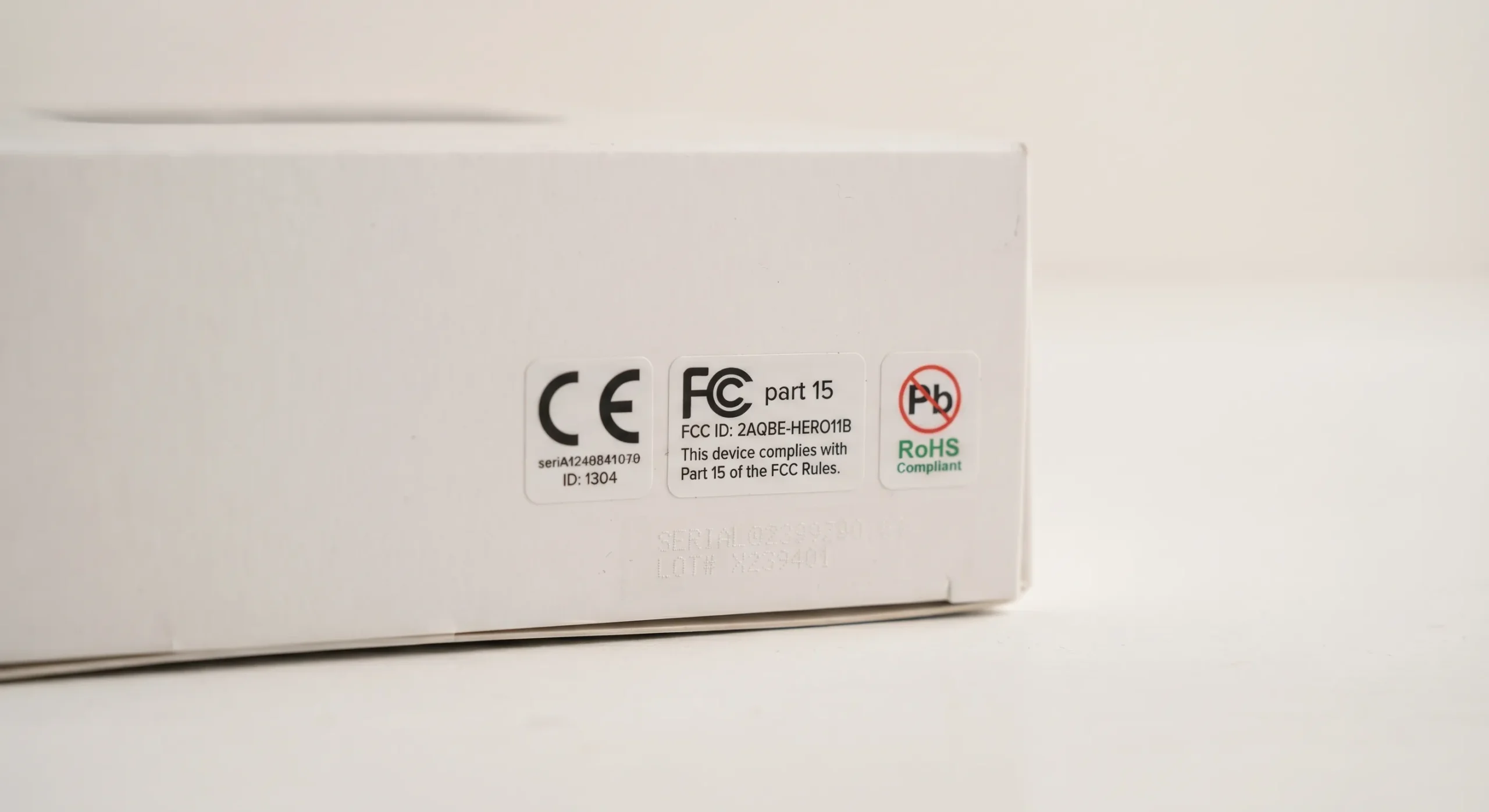
CE Marking (Conformité Européenne)
- What it means: The CE mark is a mandatory self-declaration (supported by technical testing) indicating that a product conforms to EU health, safety, and environmental protection legislation.
- Scope for Cameras: For cameras, CE compliance typically spans multiple European directives, including the Low Voltage Directive (LVD) for power safety, the Electromagnetic Compatibility (EMC) Directive to ensure the device doesn’t emit or suffer from electromagnetic interference, and the Radio Equipment Directive (RED) if the camera features built-in Wi-Fi or Bluetooth.
FCC Certification (Federal Communications Commission)
- What it means: Regulated by the United States government under FCC Part 15, this certification governs “intentional radiators” (devices that intentionally transmit radio frequency energy, such as Wi-Fi and Bluetooth-enabled cameras) and “unintentional radiators” (digital devices that generate radio frequencies internally).
- Scope for Cameras: Because virtually all modern consumer and security cameras feature wireless pairing or digital displays, they require formal FCC authorization (either via Supplier’s Declaration of Conformity or FCC Certification with an assigned FCC ID) before entering US commerce.
RoHS Compliance (Restriction of Hazardous Substances)
- What it means: RoHS restricts the use of ten specific hazardous materials found in electrical and electronic equipment, including lead, mercury, cadmium, and hexavalent chromium.
- Scope for Cameras: RoHS is a material-level compliance standard. Every soldered joint, circuit board, wiring harness, and plastic casing within your camera must comply with these thresholds to be legally sold in the European Union and an increasing number of international jurisdictions.
2. Market Mapping: Which Region Requires What?
Compliance is entirely geographic. Understanding where your inventory will land determines which test reports and documentation you must secure prior to mass production.
- United States: The primary federal requirement is FCC certification for electromagnetic and radio frequency compliance. Additionally, if your camera ships with a lithium-ion battery or plugs into AC power, electrical safety marks (such as UL or ETL listings, though technically voluntary at the federal level, are heavily demanded by US retailers and commercial insurance providers). RoHS compliance is also required by specific states (such as California and New York).
- European Union & UK: The CE mark is legally required for the European Economic Area (EEA), while the UKCA mark governs the post-Brexit United Kingdom market. Both regions strictly enforce RoHS and the Waste Electrical and Electronic Equipment (WEEE) directives.
- Global / Other Markets: Many other countries align their national standards with international bodies. For instance, Australia and New Zealand require the RCM (Regulatory Compliance Mark), while parts of Latin America and Asia often accept or adapt FCC and CE test reports through local certification bodies.
3. Timelines, Costs, and Testing Realities
Budgeting time and capital for compliance is critical to avoiding costly launch delays.
- Testing Duration: Full compliance testing for a wireless-enabled camera at an accredited ISO 17025 laboratory (such as TÜV Rheinland, SGS, or Intertek) typically takes 2 to 4 weeks. This assumes the prototype passes on the first attempt.
- What Triggers Delays: If a camera fails EMC emissions testing—a common issue with poorly shielded digital sensor boards or cheap power supplies—engineers must redesign circuit layouts or add shielding tape, resetting the testing clock.
- Cost Structure: Testing fees vary based on complexity. Basic CE-EMC and RoHS testing might range from $1,500 to $3,000, while full FCC intentional radiator testing with an official FCC ID filing can push total laboratory expenses higher.
4. Who Is Responsible: The Factory or the Buyer?
A dangerous misconception among new importers is that sourcing from an ISO 9001-certified Chinese factory automatically transfers compliance responsibility to the manufacturer. Legally, the importer of record or brand owner bears ultimate responsibility.
- The Factory’s Role: A reputable OEM/ODM factory should provide baseline test reports and component declarations. However, factories often produce generic reports based on older prototypes or basic reference designs rather than your exact custom-branded SKU.
- The Buyer’s Role: As the brand owner or importer, customs authorities and market surveillance agencies hold you accountable for the final product placed on shelves. You must independently verify that test reports are current, issued by an accredited laboratory, and match your exact bill of materials. Always request and archive the complete technical file, including circuit diagrams, user manuals, and Declaration of Conformity (DoC) templates.
5. What Happens If You Sell Without Certifications?
Attempting to bypass compliance to save money or time exposes your business to catastrophic risks across multiple fronts:
- Customs Seizures: Customs and Border Protection (CBP) or EU border authorities routinely inspect electronics shipments. Lacking valid FCC ID documentation or CE declarations results in immediate cargo detention, heavy storage fees, and eventual mandatory destruction or re-export of your inventory.
- Marketplace Bans & Account Terminations: E-commerce platforms like Amazon aggressively audit electronics. If a customer reports a safety issue, or if regulatory bodies flag your listing, Amazon will immediately suppress the ASIN, freeze associated funds, and potentially suspend your seller account permanently.
- Liability and Litigation: If an uncertified camera—particularly one with a low-quality lithium-ion battery—overheats, sparks, or causes property damage, your commercial liability insurance will likely void coverage due to illegal product importation. This leaves your business exposed to devastating personal injury and property lawsuits.
Conclusion
Navigating international compliance for camera imports requires treating regulatory validation as a core pillar of product development rather than an afterthought. By securing verifiable CE, FCC, and RoHS documentation from accredited laboratories, verifying your supply chain at the component level, and accepting ultimate accountability as an importer, you protect your capital, safeguard your brand reputation, and build a resilient foundation for global expansion.