
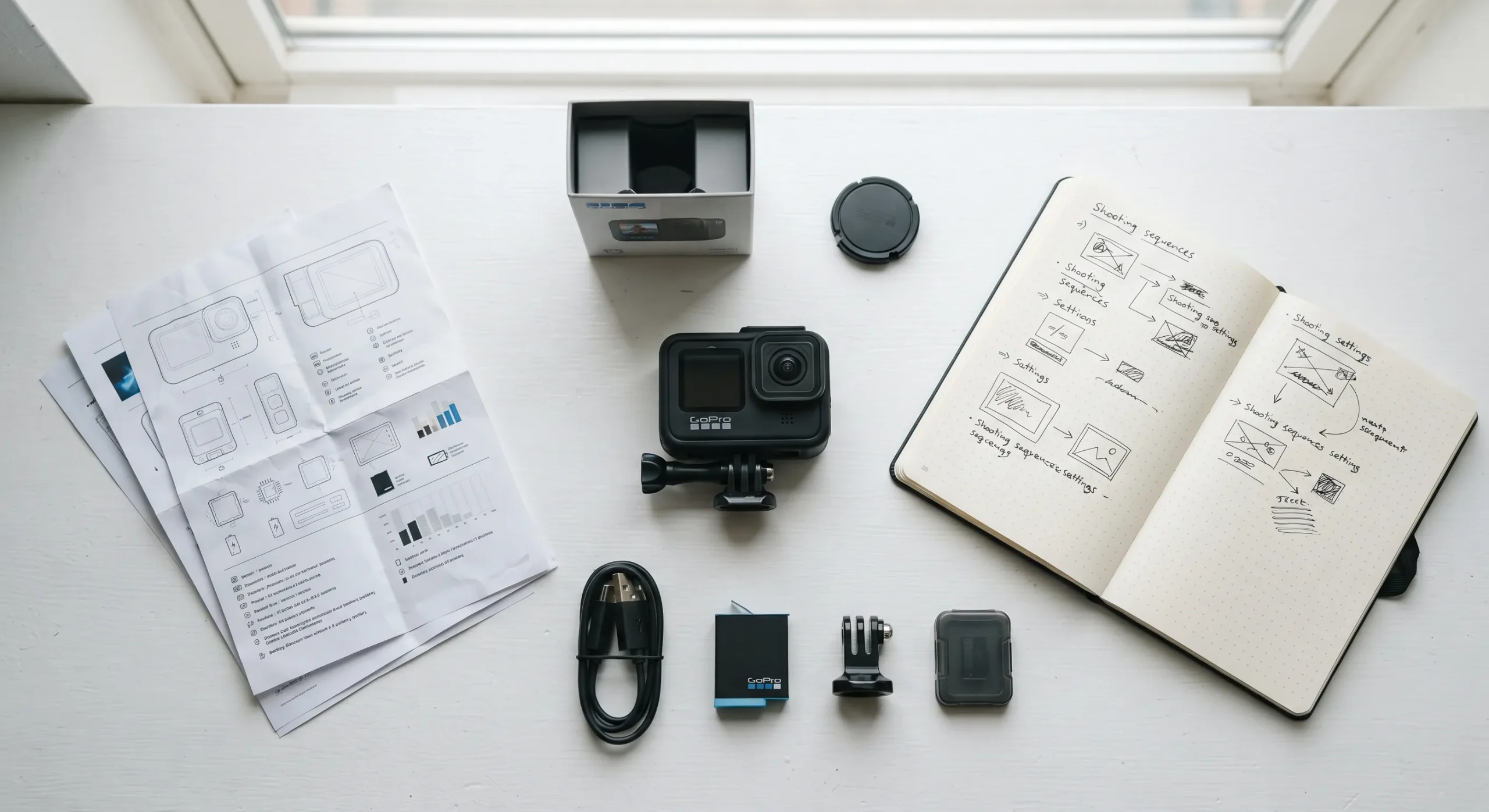
The global action camera market continues to expand rapidly, driven by the demand for portable content creation tools, sports recording, and rugged vlog setups. For importers, Amazon FBA sellers, and consumer electronics brand owners, sourcing action cameras from overseas manufacturers represents a high-margin opportunity.
However, hardware in this category carries unique technical complexities. Selecting the wrong manufacturing partner or under-specifying key hardware components can quickly result in high return rates, negative customer reviews, and damaged brand reputation.
This guide breaks down the essential technical specs, sourcing models, MOQ strategies, and factory vetting procedures necessary to successfully launch or scale an action camera brand.
1. Key Technical Specifications to Evaluate
When evaluating samples from factories, avoid relying solely on marketing datasheets. Test hardware samples rigorously across these four critical performance pillars:
Resolution and Frame Rates
- True 4K vs. Interpolated 4K: Lower-cost chipset configurations often use software interpolation to upscale 1080p footage to 4K at low frame rates (e.g., 4K @ 15fps or 24fps). Ensure your factory provides true native 4K at 60fps or at least 30fps utilizing reputable sensor-processor combinations (such as Novatek, Ambarella, or Sony sensors).
- Frame Rate Flexibility: High-performing action cameras must offer high frame rates at lower resolutions—such as 1080p at 120fps or 240fps—to allow smooth slow-motion capture, a key selling point for action sports enthusiasts.
Stabilization Technologies
Hardware stabilization (OIS) is rare in compact action cameras due to size and durability constraints. Therefore, Electronic Image Stabilization (EIS) or gyro stabilization is paramount.
- Verify whether the factory integrates 6-axis gyro stabilization.
- Test EIS under active conditions (e.g., mounting on a bicycle or walking) to check for artificial “jello” effects or frame cropping issues.
Waterproofing Capabilities
- Native Waterproofing: Premium models feature IP68-rated sealed bodies capable of reaching 10 meters without an external housing.
- Cased Waterproofing: Budget-friendly entry models rely on an included waterproof acrylic housing (typically rated to 30 meters).
- Quality Assurance: Ensure the factory conducts pressure testing on every unit or sample batch to prevent lens fogging or seal leaks.
Battery Life and Thermal Management
Compact action cameras generate significant heat when processing high-bitrate 4K video.
- Look for batteries rated between 1050 mAh and 1350 mAh, which should yield approximately 70–90 minutes of continuous 4K recording.
- Check thermal dissipation: test whether the camera automatically shuts down due to overheating within 20–30 minutes of stationary 4K capture.
2. White-Label vs. OEM vs. ODM: Sourcing Strategies
Understanding the distinction between manufacturing models dictates your initial capital expenditure, time-to-market, and product differentiation.
+-------------------------------------------------------------------------------+
|                             SOURCING SPECTRUM                                 |
+-------------------------------------------------------------------------------+
|  WHITE-LABEL (Off-the-shelf)  -->  OEM (Custom Branding)  -->  ODM (Custom Design) |
|  - Fastest to market              - Existing mold            - Custom tooling    |
|  - Lowest entry cost              - Custom firmware/GUI      - Proprietary IP    |
|  - High competition               - Moderate differentiation - High upfront capital |
+-------------------------------------------------------------------------------+
- White-Label (Off-the-Shelf): You purchase pre-manufactured cameras and apply your logo to the housing and packaging.
- Best for: Fast market entry, low initial testing budget, or supplemental inventory.
- Drawback: High competition on platforms like Amazon with identical physical designs.
- OEM (Original Equipment Manufacturer): The factory uses an existing industrial design (housing mold), but allows you to customize firmware (custom boot screen, user interface UI), internal components (upgraded Sony sensor), and packaging.
- Best for: Establishing brand identity while avoiding tens of thousands of dollars in custom mold costs.
- ODM (Original Design Manufacturer): You co-develop a unique product from scratch, including custom ID design, PCB engineering, and proprietary tooling.
- Best for: Established brands aiming to build a defensible product ecosystem with proprietary patents.
3. Minimum Order Quantity (MOQ) Considerations
Negotiating MOQs requires understanding where the factory’s structural costs lie:
| Customization Level | Typical MOQ Range | Main Cost Drivers |
| Standard Stock / White-Label | 100 – 500 units | Basic packaging printing, laser logo etching |
| Customized Firmware & Packaging (OEM) | 1,000 – 2,000 units | Custom gift box production runs, manual UI flashing |
| Custom Color Housing / Tooling (ODM) | 3,000 – 5,000+ units | Plastic injection setup, custom chipset/sensor SMT runs |
Negotiation Tip for Importers: If a factory quotes an MOQ of 2,000 units for custom packaging, offer to pay for the full print run of 2,000 boxes upfront, but ask to split the hardware assembly into two smaller batches of 1,000 units. This lowers your initial inventory risk while covering the supplier’s material commitments.
4. Key Questions to Ask a Factory Before Placing an Order
Before issuing a Purchase Order (PO) or paying a deposit, ask these targeted questions to vet the supplier’s technical competence and quality control:
Supply Chain & Component Quality
- “What exact sensor and main processor models are used in this unit?” (e.g., Sony IMX386 + Novatek 96683).
- “Are these components sourced directly from authorized distributors or open-market secondary channels?”
Quality Control & Certifications
- “What is your factory defect rate (AQL standard) for action cameras, and what is your policy for units Dead-on-Arrival (DOA)?”
- “Do you hold valid CE, FCC, RoHS, and MSDS/UN38.3 certifications specifically for the internal battery and camera model?” (Crucial for Amazon listing approval and customs clearance).
Software & Support
- “Do you provide firmware updates to address bug fixes, and can we customize the default smartphone companion app (iOS/Android) with our branding?”
- “What heat and pressure testing protocols do you execute on waterproof housings prior to shipment?”
Final Recommendation
Success in importing action cameras comes down to managing hardware reliability and firmware stability. Always request functional pre-production samples (Golden Samples) and contract an independent third-party inspection agency (e.g., QIMA, V-Trust) to conduct a During Production (DUPRO) or Final Random Inspection (FRI) before final balance payment. By securing the right sensor combination and establishing clear quality control expectations up front, you can build a resilient and profitable hardware brand.