When you plan a digital camera bulk order, the single biggest decision is not which model to choose — it is who builds it. The right factory makes sourcing predictable. You get consistent quality, clear timelines, and a product you can proudly put your brand on.
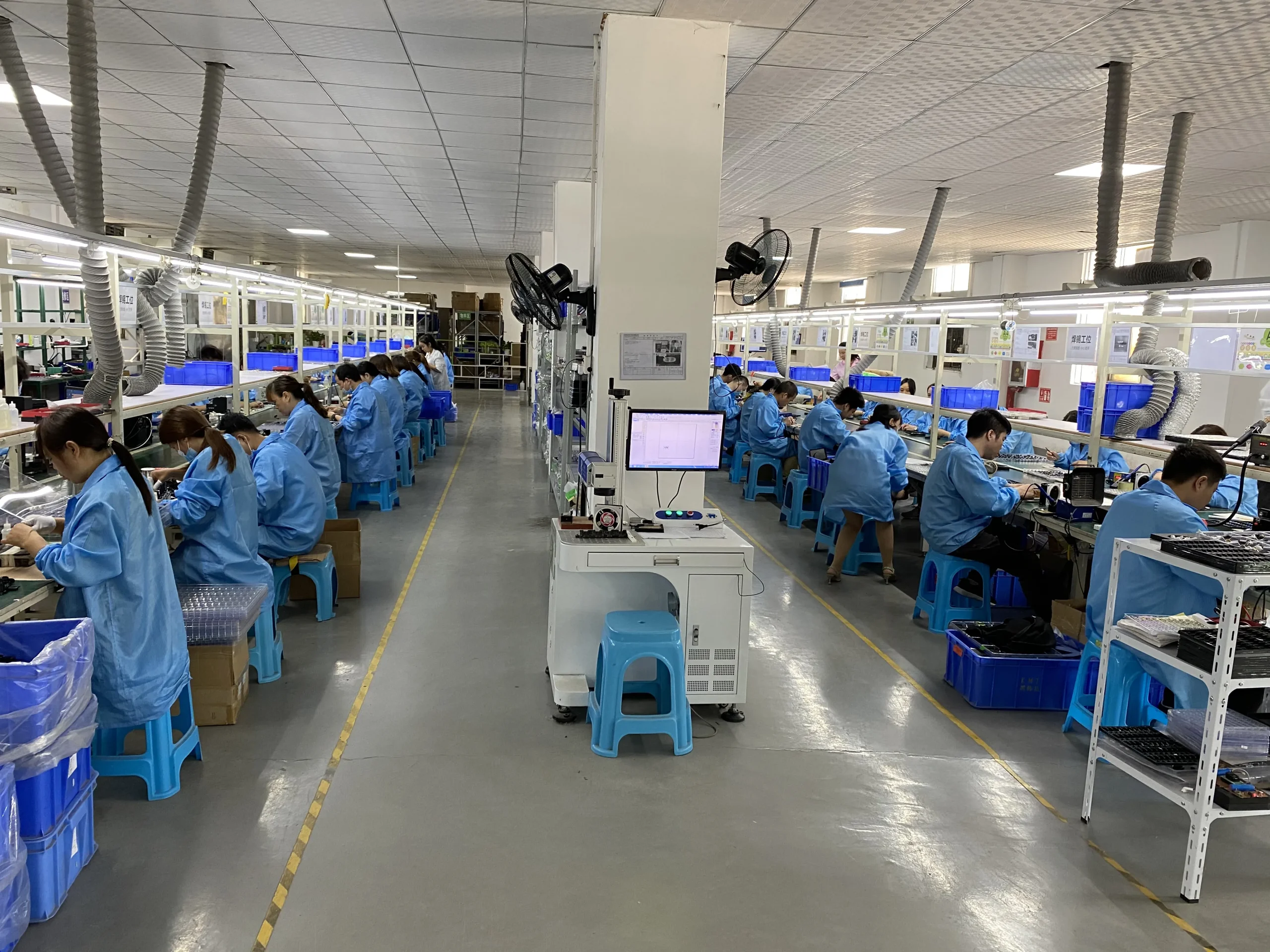
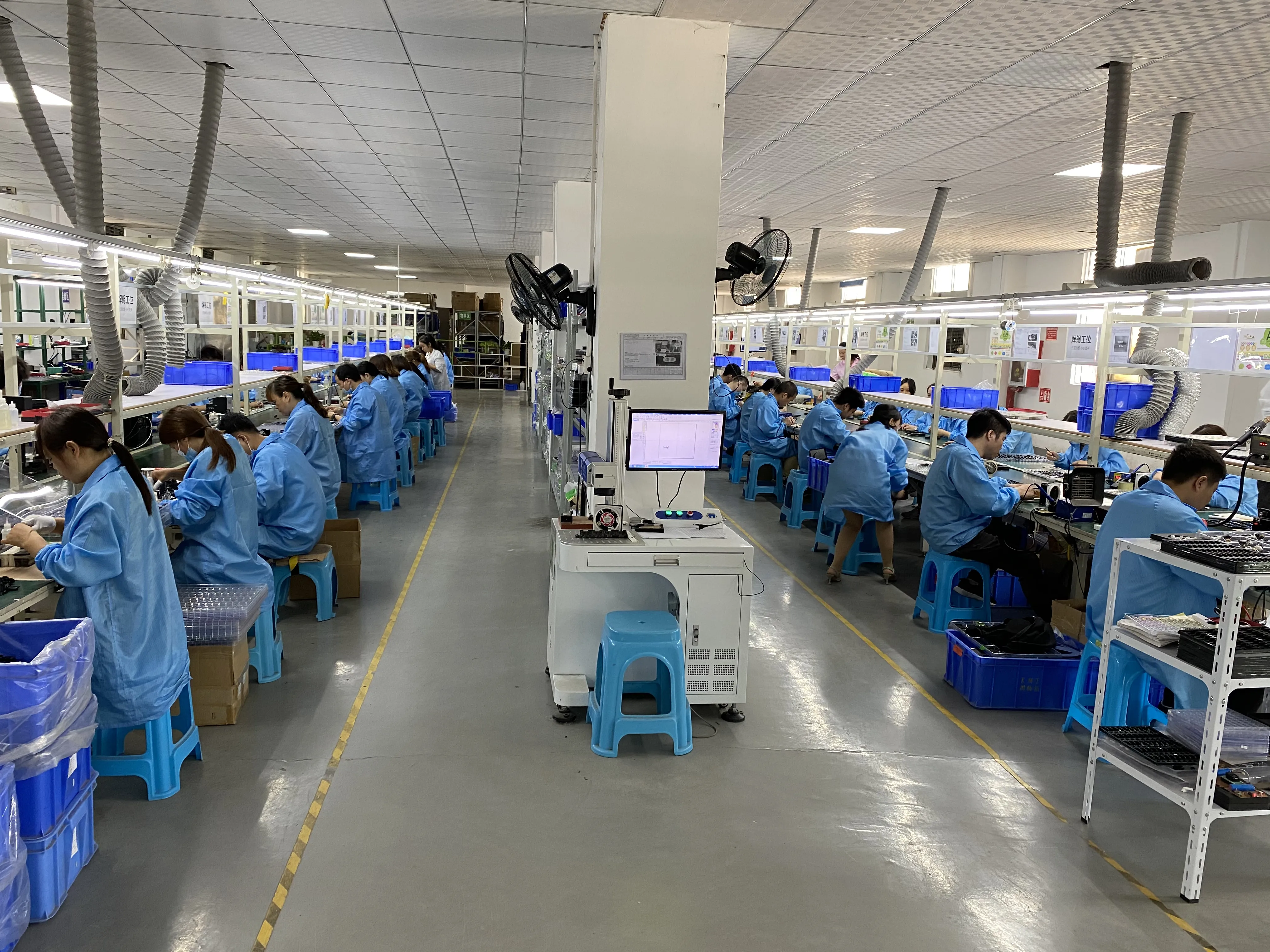
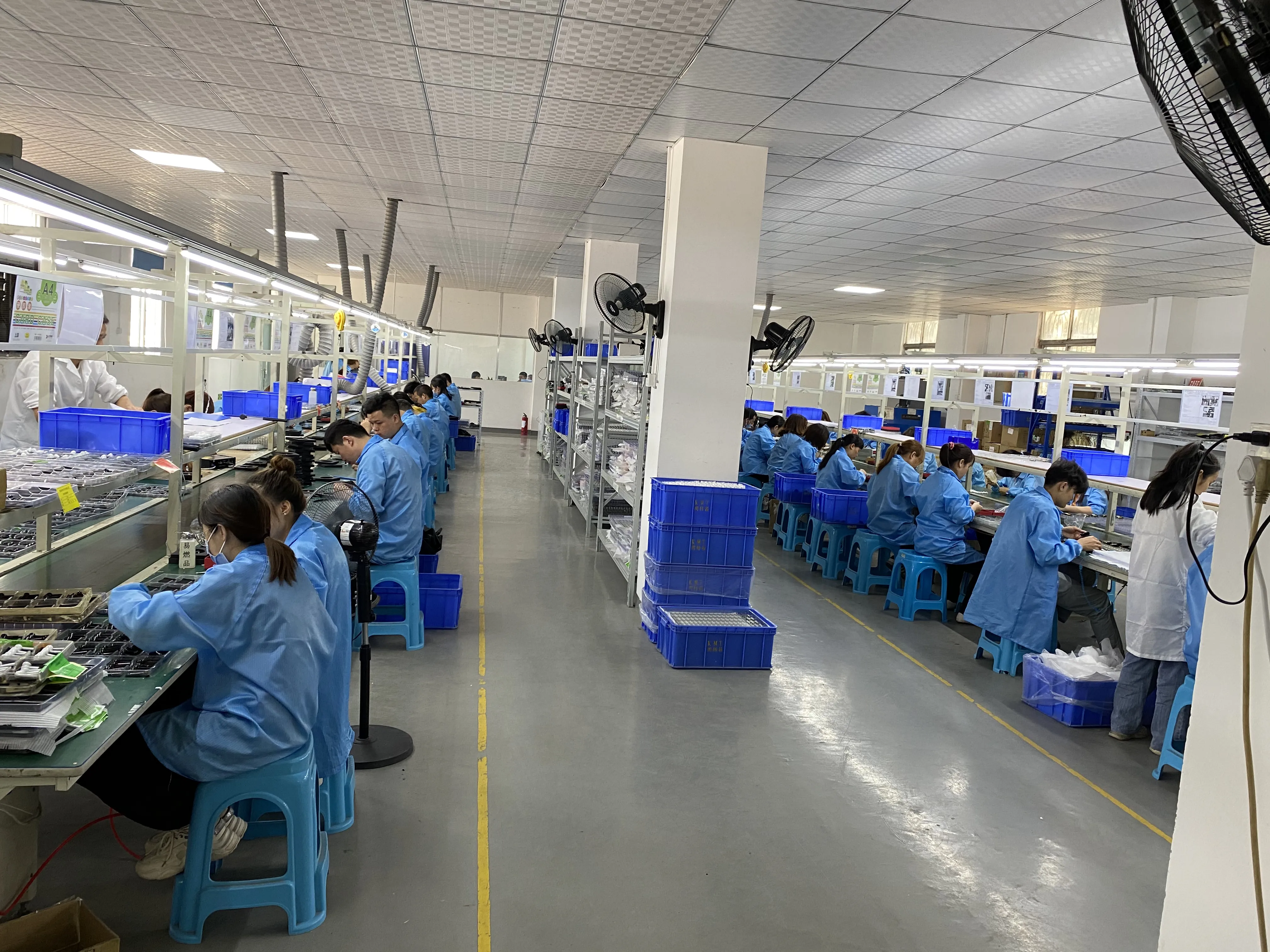
JSRD (Shenzhen Jinsheng Ruida Technology Co., Ltd.) is a maker of digital cameras based in Shenzhen, China. Our 1,100-square-meter facility runs two dedicated camera production lines with a daily output of 2,000+ units. In this guide, we open the doors of our OEM camera production process. We walk through every step, from your first inquiry to the container leaving our warehouse. That way, you know exactly what to expect before you place a bulk camera order.
What OEM Camera Production Actually Covers
OEM camera production means we manufacture cameras to your specification and put your brand on them. Depending on how much you want to customize, there are three ways to work with us:
- White-Label — MOQ 500 units (MOQ = minimum order quantity, the smallest order we accept). Ready-to-ship camera models with no product changes. This is the fastest route to market if you are testing demand.
- OEM — MOQ 1,000 units. Your brand on the product: laser-engraved logo, custom packaging, and custom colors.
- ODM — MOQ on request. A camera built to your specification. This includes re-tooled molds, app re-branding with your own brand name and icon, and firmware customization of the startup screen and menu.
If you’re weighing which model fits your business, read the difference between OEM and ODM first. And if your goal is launching a retail brand with minimal upfront investment, start with building your own camera brand with white-label manufacturing.
For e-commerce sellers comparing bulk digital cameras for sale, the practical difference between these three routes comes down to speed versus exclusivity. What matters more than the label is the digital camera company behind it. The digital camera company you choose controls the tooling, the testing, and the schedule — and those decide whether your launch succeeds.
Inside the Factory: Our Eight-Step OEM Camera Production Process
Every order at JSRD moves through the same eight steps. Here is what happens at each one — and what you provide along the way.
Step 1–2: Inquiry and Quotation
You send us your target product, quantity, and destination market. We respond within 1–2 business days with a detailed quote and the production timeline. At this stage it helps to share as much as you can. Your target retail price, required certifications, and packaging ideas all shape the final specification.
Step 3: Design and Customization
This is where your brand goes on the product. We laser-engrave your logo onto the camera body, print your packaging, and match body colors to your brand palette. The AC-3 supports custom colors from 1,000 units. Our art support team assists with packaging design. For ODM programs, our in-house engineers handle industrial design, electronic engineering, and structural engineering under one roof.
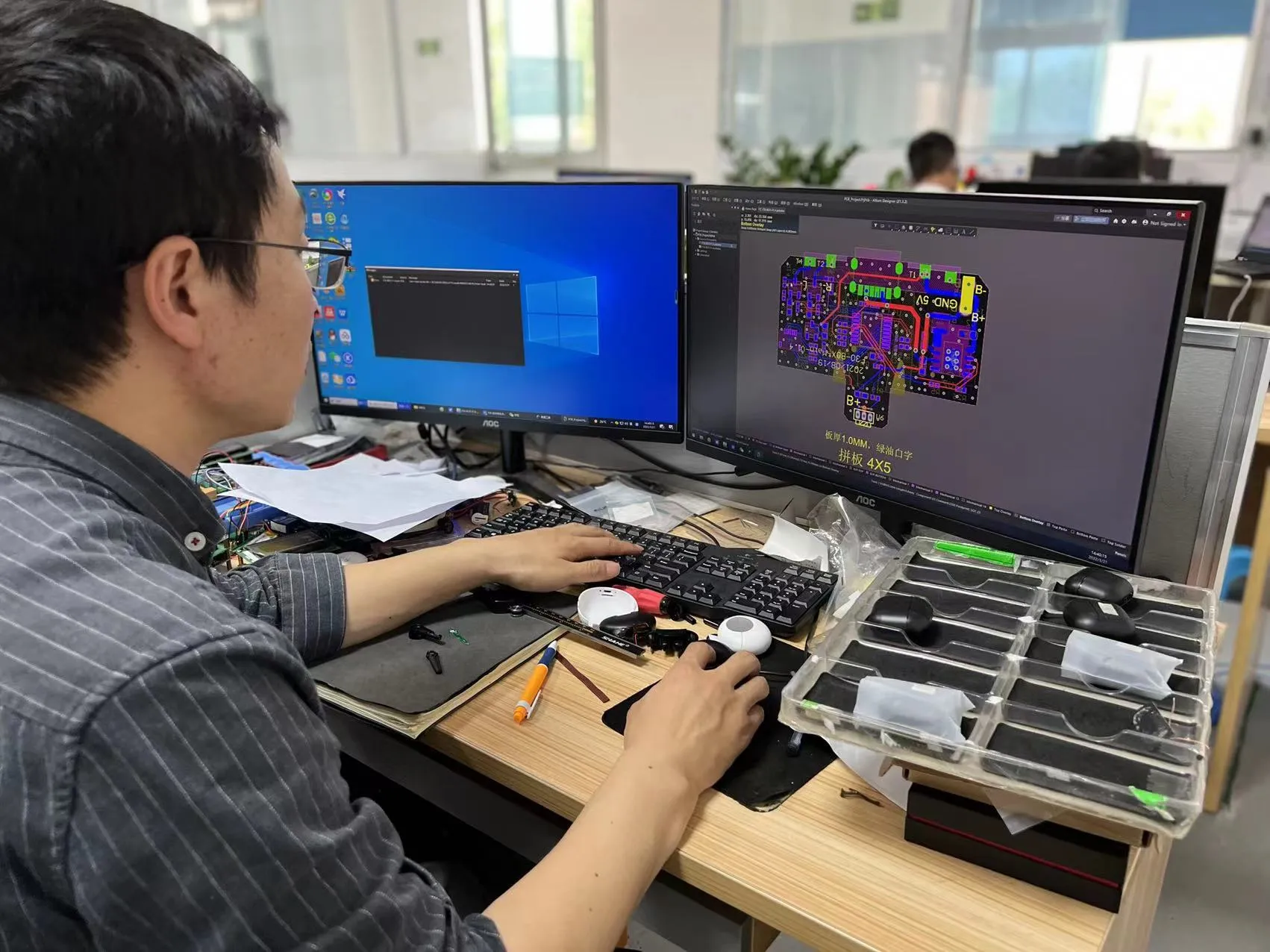
Step 4: Production
Once you approve the samples and designs, your order enters production on one of our two camera lines. The facility covers 1,100 square meters and produces 2,000+ units per day with a staff of 50–60. Standard orders complete the production cycle in 15–20 days.
Mold making also happens in-house. We run a CNC milling machine (HW-650) and a CNC machining center (V33e) — computer-controlled machines that cut steel with high precision. Wire EDM machines cut hardened steel with electrical sparks, and a mold laser welding machine joins and repairs mold parts.
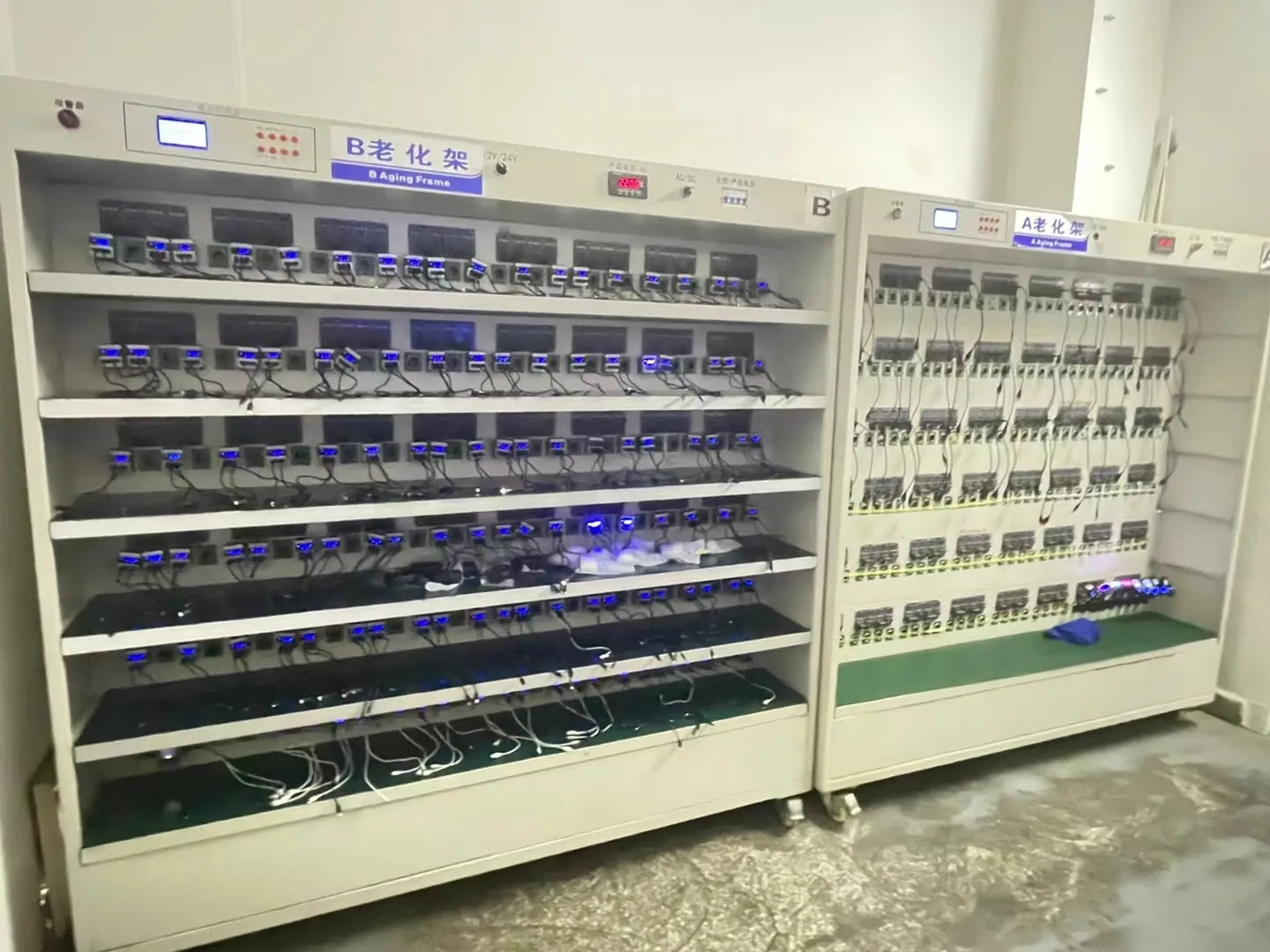
Step 5: Inspection and Testing
Before any camera ships, it passes through our in-house testing stations. Every digital camera power supply is verified before packing. That includes the battery, the charging circuit, and the Type-C port (the standard charging plug used on most phones).
- Battery aging test racks (A/B) — charge and discharge cycle testing
- PCB function testing jig — verifies every PCB (the camera’s main circuit board)
- Connector plug force tester — tests the insert-and-pull strength of every port
- Dual-station acoustic test setup — parallel acoustic (sound) and RF (radio frequency, wireless signal) testing
- Reliability testing laboratory — temperature, humidity, drop, and mechanical tests
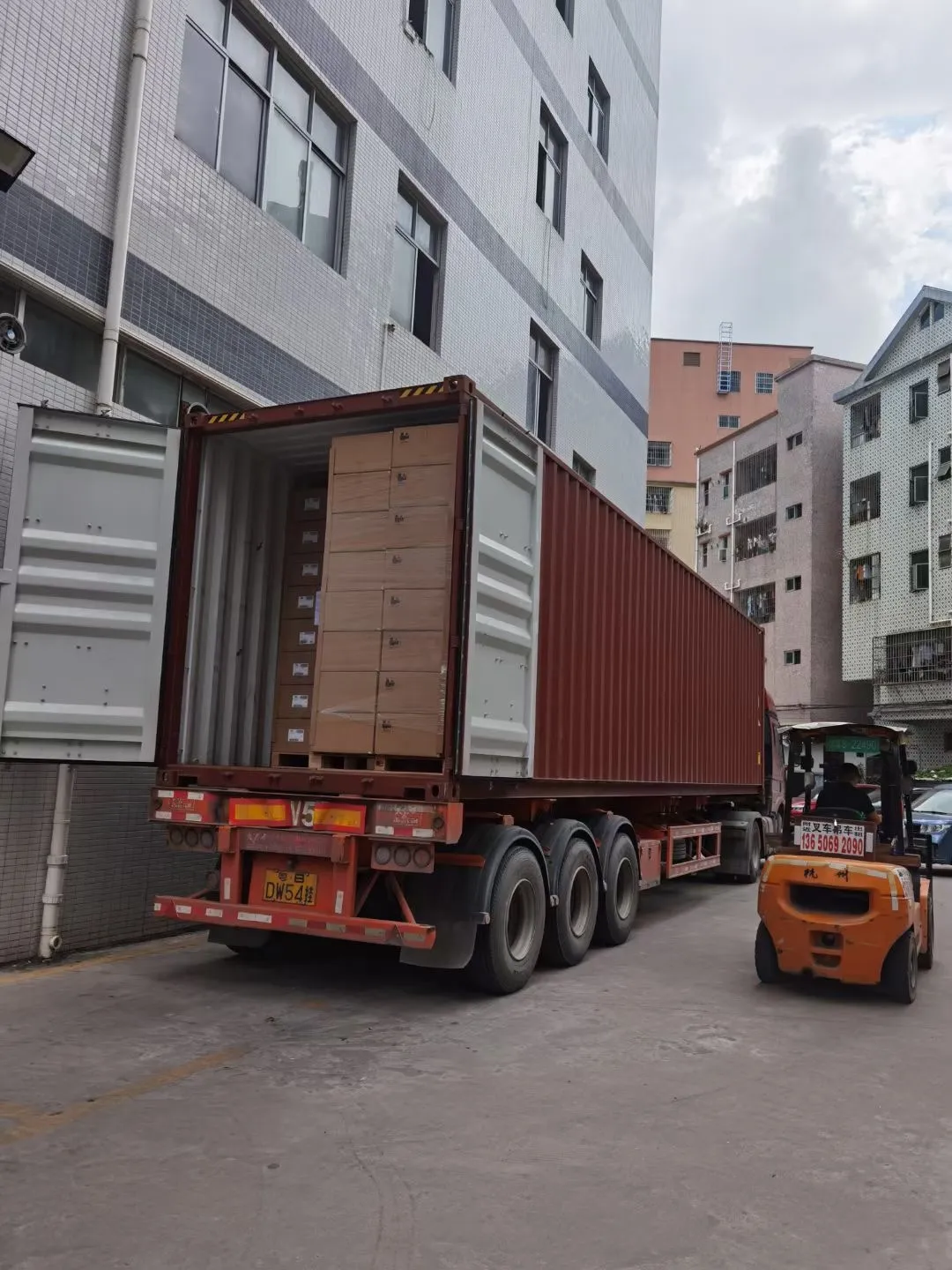
Step 6–8: Warehousing, Shipping, and Confirmation
Finished units are stored in our own warehouse, then packed for export. Our cameras contain lithium batteries. Every shipment therefore travels with UN38.3 transport test reports (required safety paperwork for shipping lithium batteries) and MSDS documents (chemical safety data sheets for the battery). Customs and carriers require these papers. You confirm the shipment details, the container leaves, and our shipping support team assists with the export documentation.
What You Can Customize: The Full Specification Scope
When buyers ask what a CMOS digital camera factory can actually change, the answer is: almost every specification that matters. Our customization scope covers the table below.
| Specification | Available Options |
|---|---|
| Image sensor | 1/4″, 1/6″, 1/6.5″, 1/10″ CMOS |
| Pixel count | 0.3MP (300K), 1MP–5MP |
| Video resolution | 480P, 720P, 1080P, 2K, 4K |
| Frame rate | 15fps, 30fps |
| Zoom | 1X–16X |
| Wireless connection | WiFi 2.4GHz with app viewing within 10 meters |
| Branding | Laser-engraved logo, custom color, custom packaging |
Not every combination is possible in one build. Sensor size interacts with lens choice and body size, so treat this table as a menu, not a fixed catalog. Our engineering team confirms feasibility for your exact specification before quoting.
Models Built for OEM and White-Label Programs
Six product lines run through our factory today. The table below shows the models most often selected for OEM programs.
| Model | Form Factor | Screen | Resolution | Battery | Standout Feature |
|---|---|---|---|---|---|
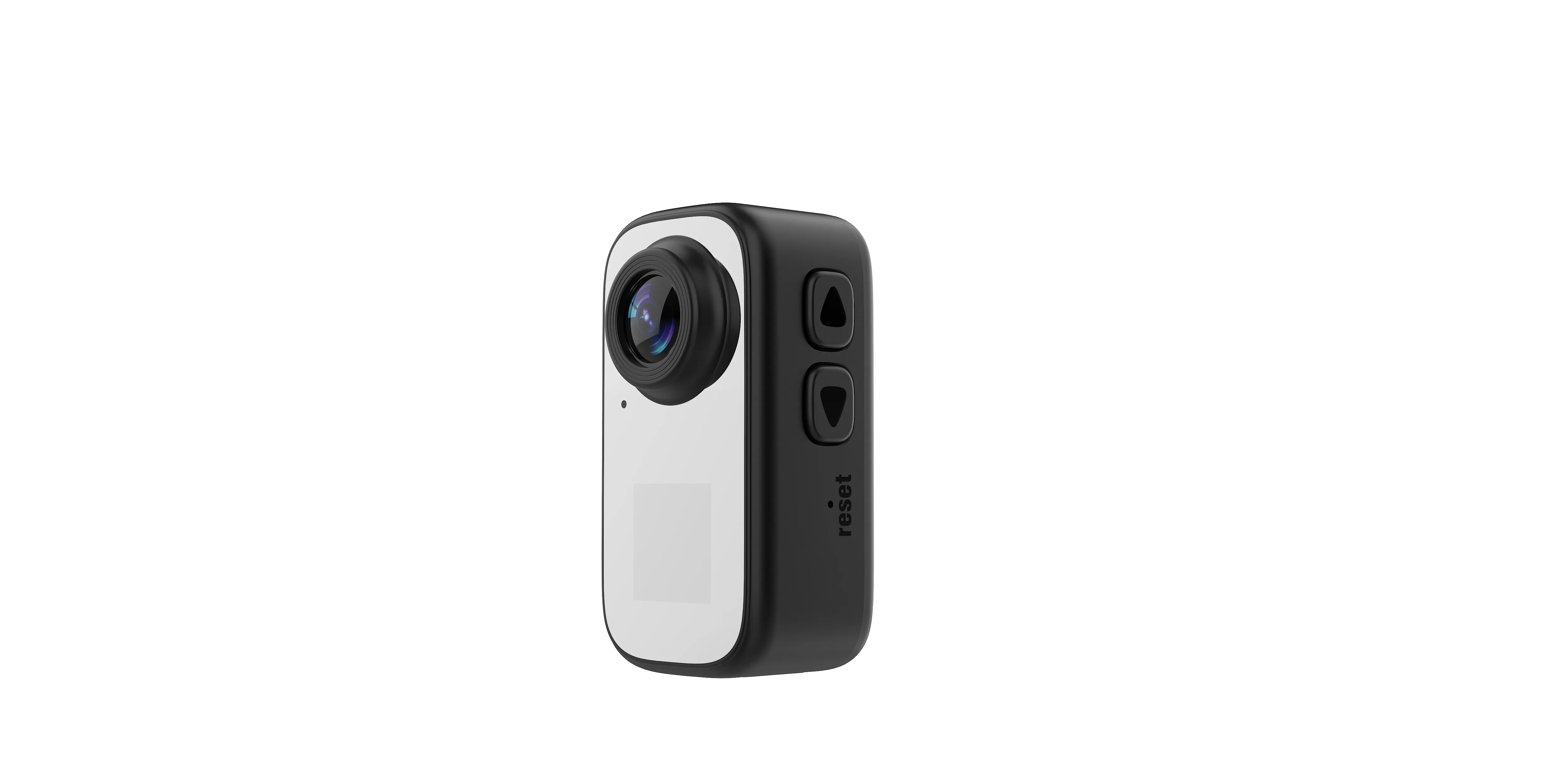
| AC-18 | Thumb-size action camera | Dual screen | 1080P/720P 30fps | 700mAh | WiFi app viewing; waterproof case to 30m (high-config) |
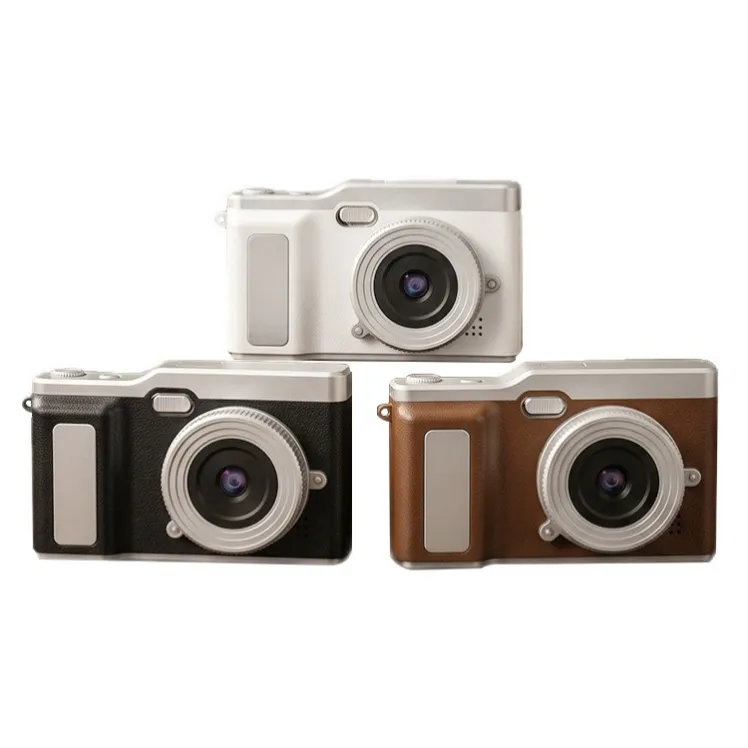
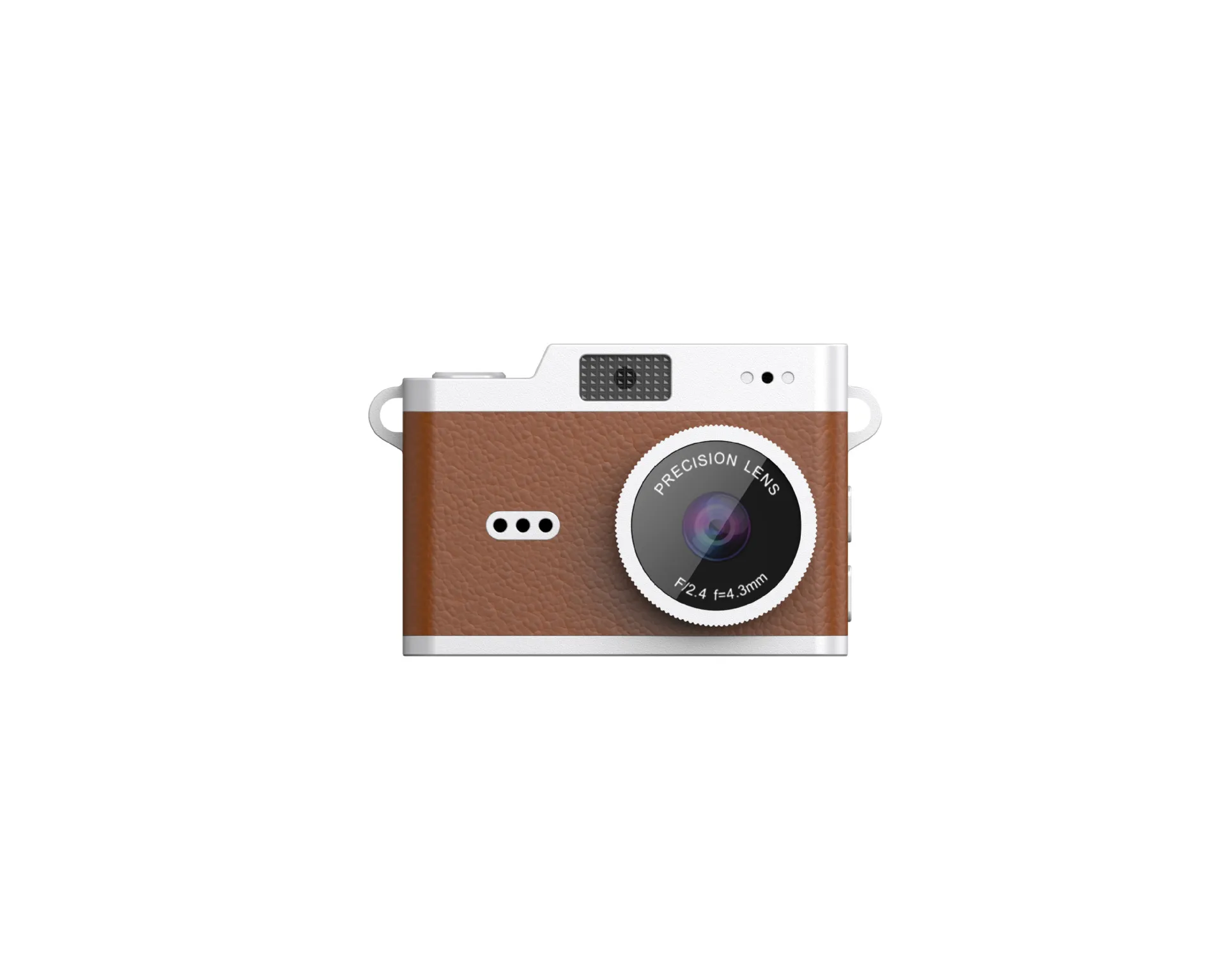
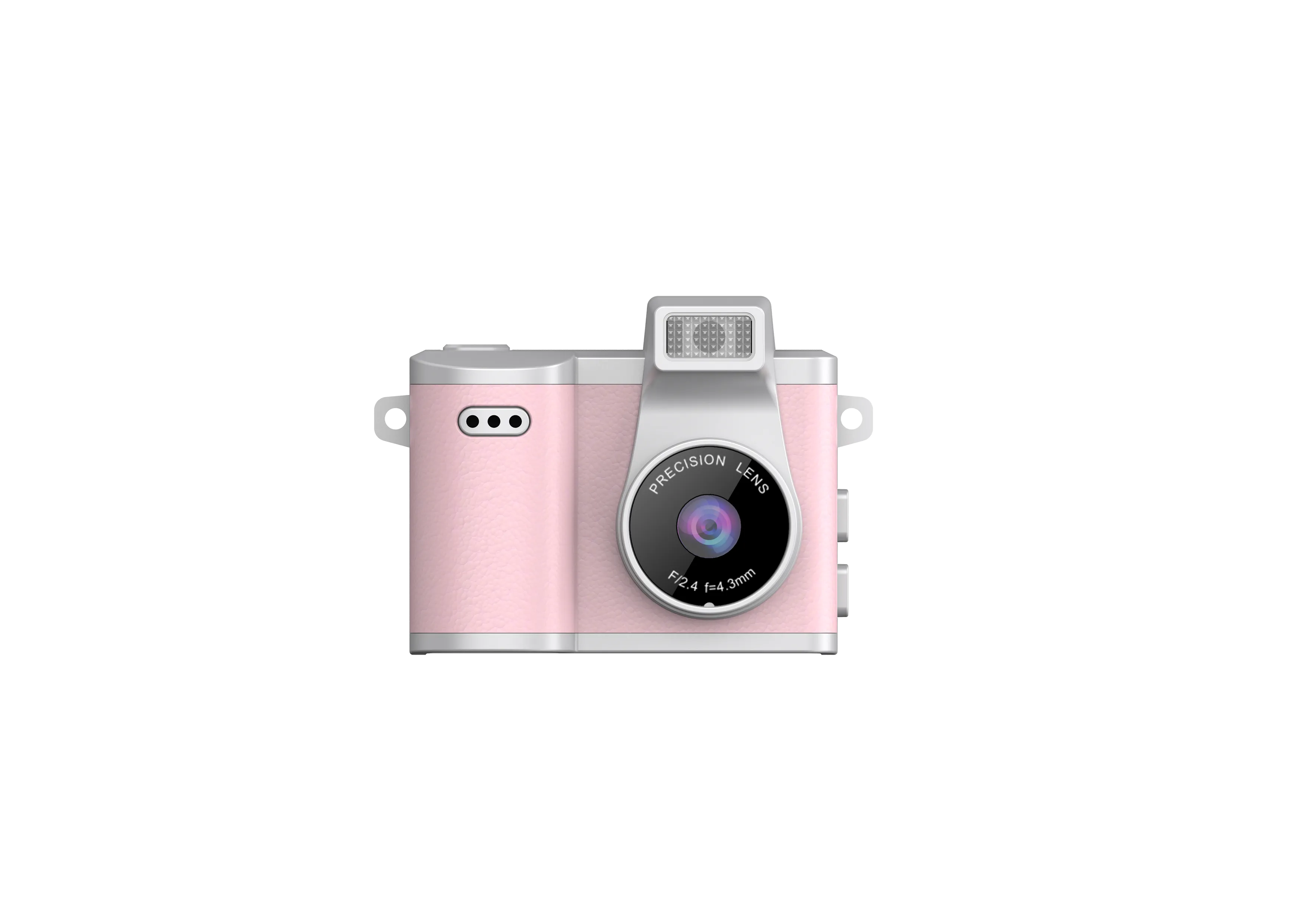
| AC-3 | Compact point-and-shoot | 2.4″ flip screen | VGA | 700mAh | 115g body; custom colors from 1,000 units |
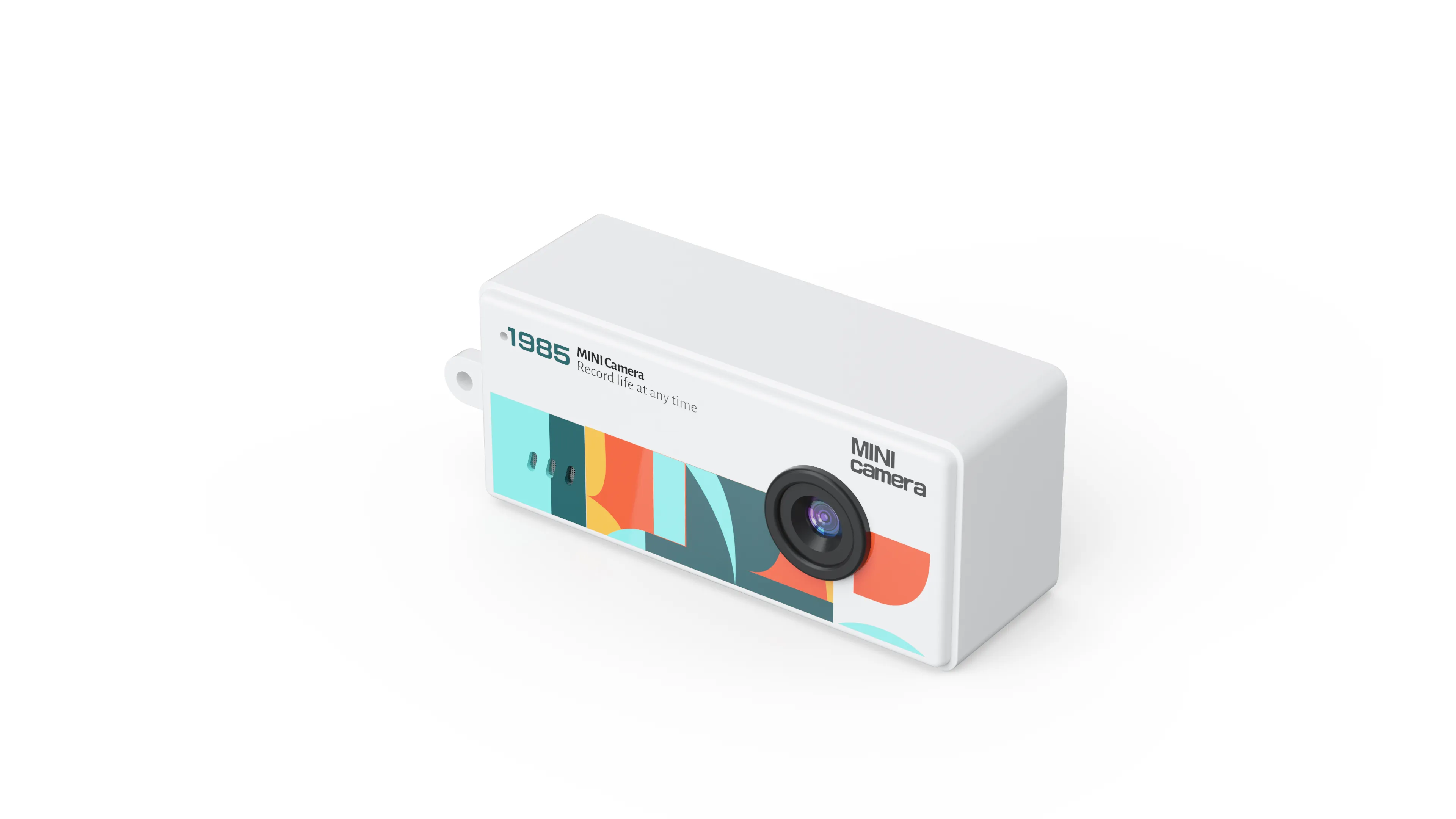
| AC-5 | Mini camera | 0.96″ IPS | VGA | 200mAh | 19.5g ultra-light |
| AC-7 | Keychain camera | 0.96″ IPS | VGA | 200mAh | Six stock colors |
| AC-8 | Mini camera | 0.96″ IPS | VGA | 200mAh | 21g ultra-light |
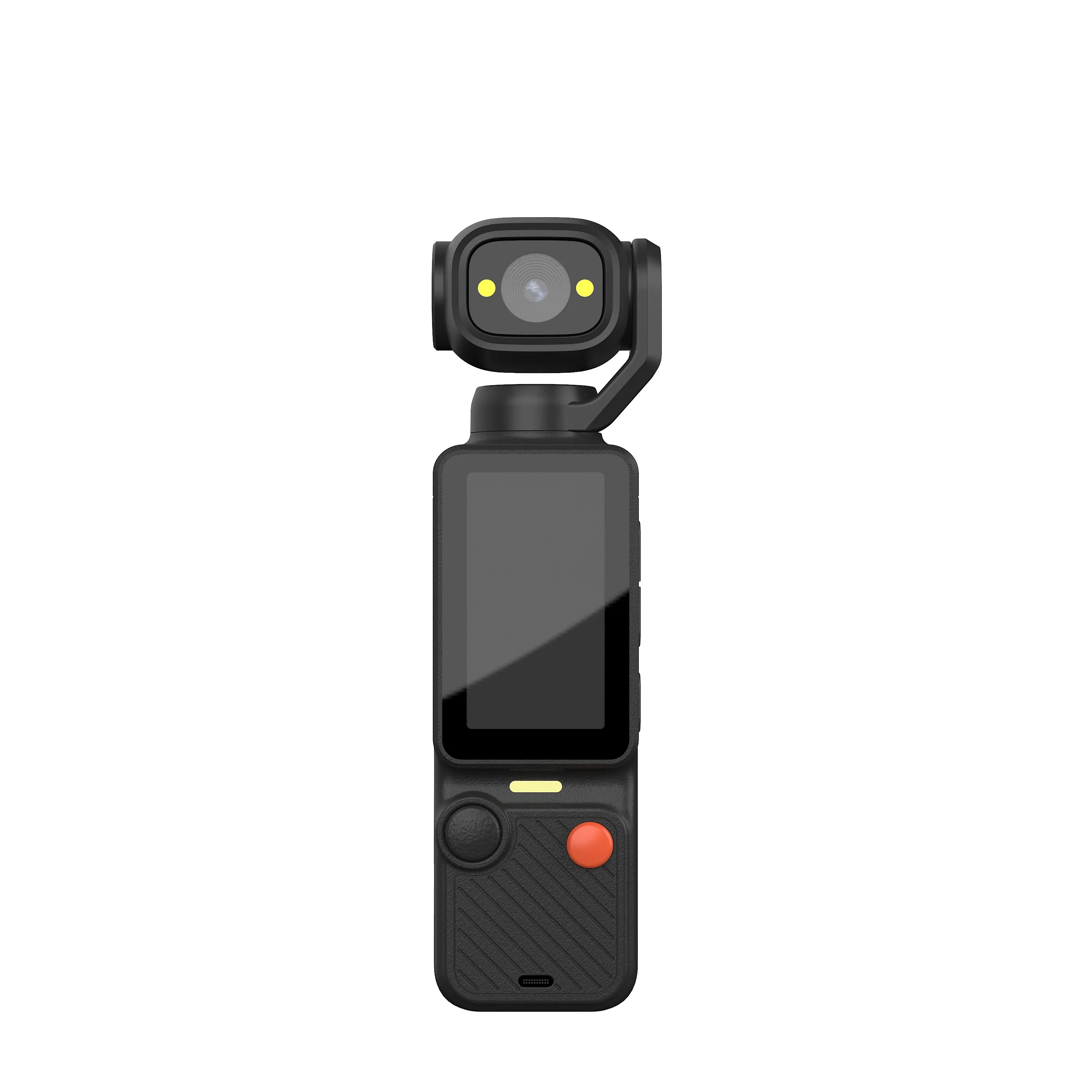
All five accept laser-engraved logos and custom packaging. The AC-18 and Pocket Gimbal represent our newest platforms. The Pocket Gimbal is a handheld gimbal camera (a camera with a motorized stabilizing grip). It is in development — ask our team about the timeline if a stabilized handheld camera fits your roadmap.
WiFi and Wireless Camera Programs
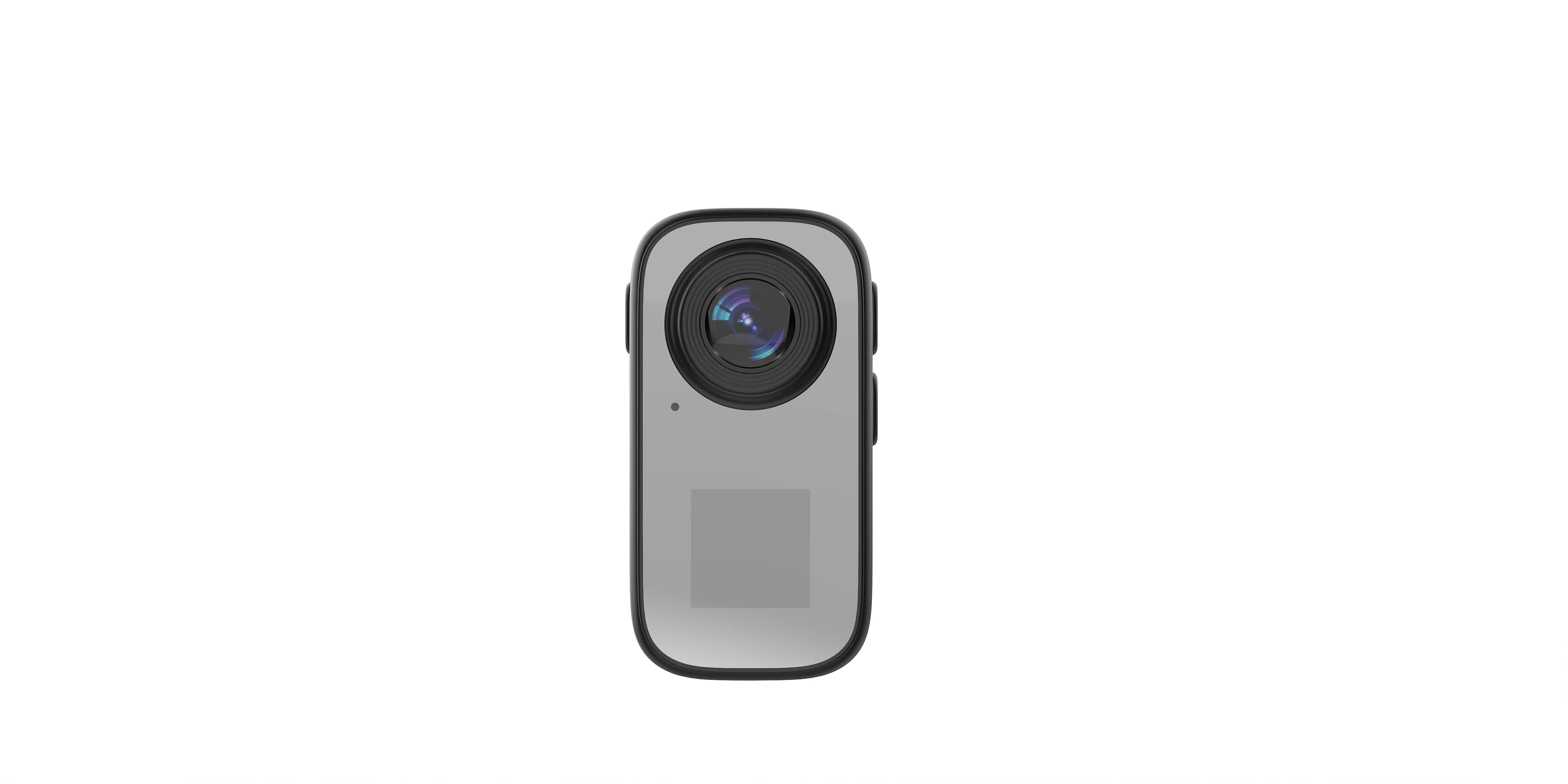
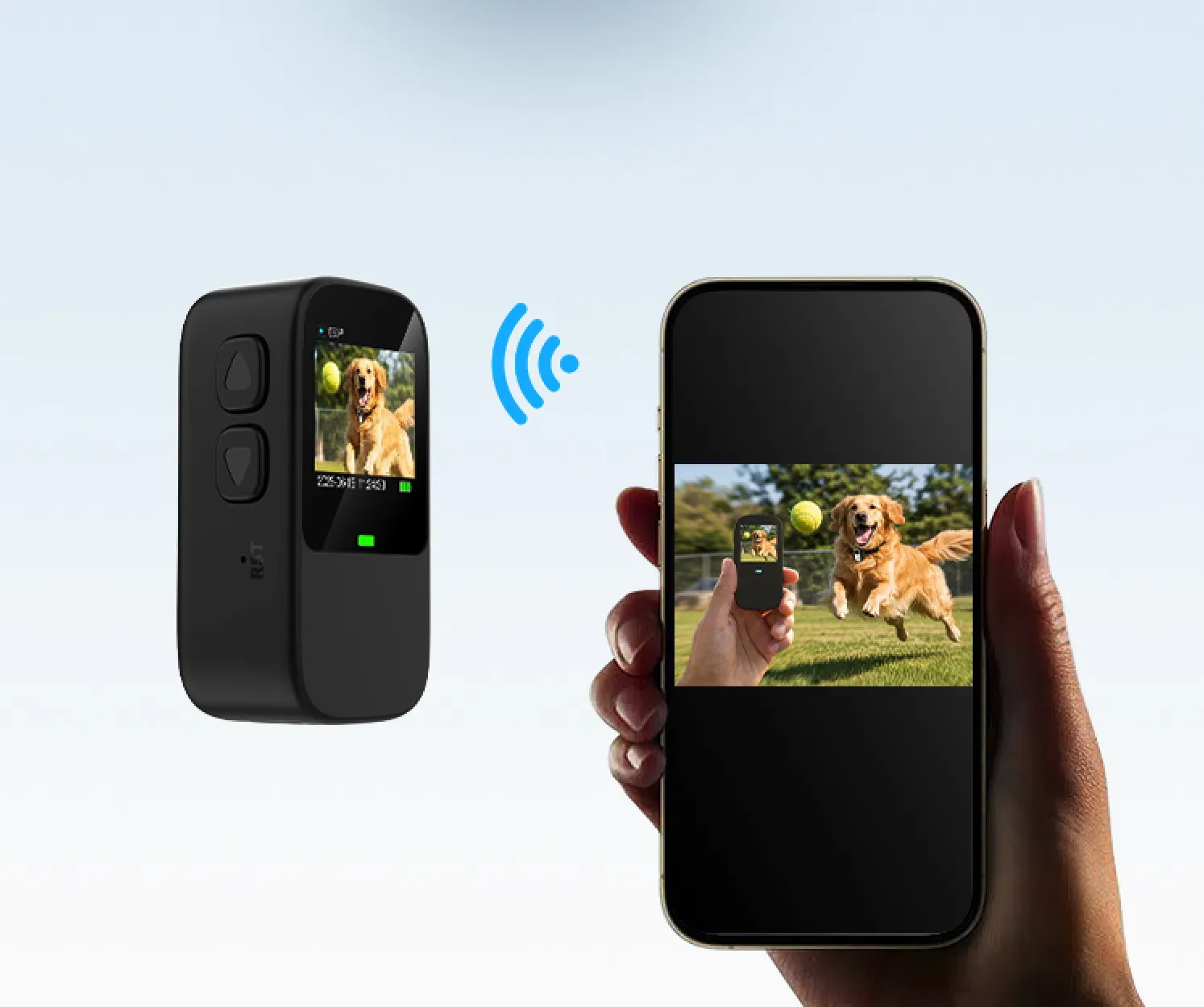
For wholesale digital cameras WiFi is now the most-requested feature, and the AC-18 is our flagship wireless model. It pairs a 2MP CMOS sensor (the image chip that captures light) with a 123° wide-angle lens. It records 1080P or 720P video at 30fps and streams a live feed to a phone app within 10 meters over 2.4GHz WiFi. As a digital video camera manufacturer, we build it with dual screens and a 700mAh battery. Charging runs through Type-C, and storage supports TF cards (microSD memory cards) up to 256GB. The high-configuration version ships with a waterproof case rated to 30 meters.
As a WiFi digital camera supplier, we support two ways to sell this capability. Brands in the US market often position the AC-18 as a wearable lifestyle camera, while importers run it as a budget action camera line. Either way, the same wireless digital camera factory stands behind the build: our own lines, our own testing, and our own firmware team. For ODM projects, that team customizes the app and the startup screen.
Sourcing complete retail kits is also an option. As a digital wireless camera kits manufacturer, we can bundle the AC-18 with its clip, mount, lanyard, and waterproof case. The box then arrives retail-ready. No matter which name a buyer uses — digital wireless camera supplier, wireless digital camera supplier, digital wireless camera manufacturer, or wireless digital camera manufacturer — the evaluation test is the same. Does the factory own the production line, and can it prove the wireless performance? Inside a digital wireless camera factory, that proof lives in the RF shielding test stations.
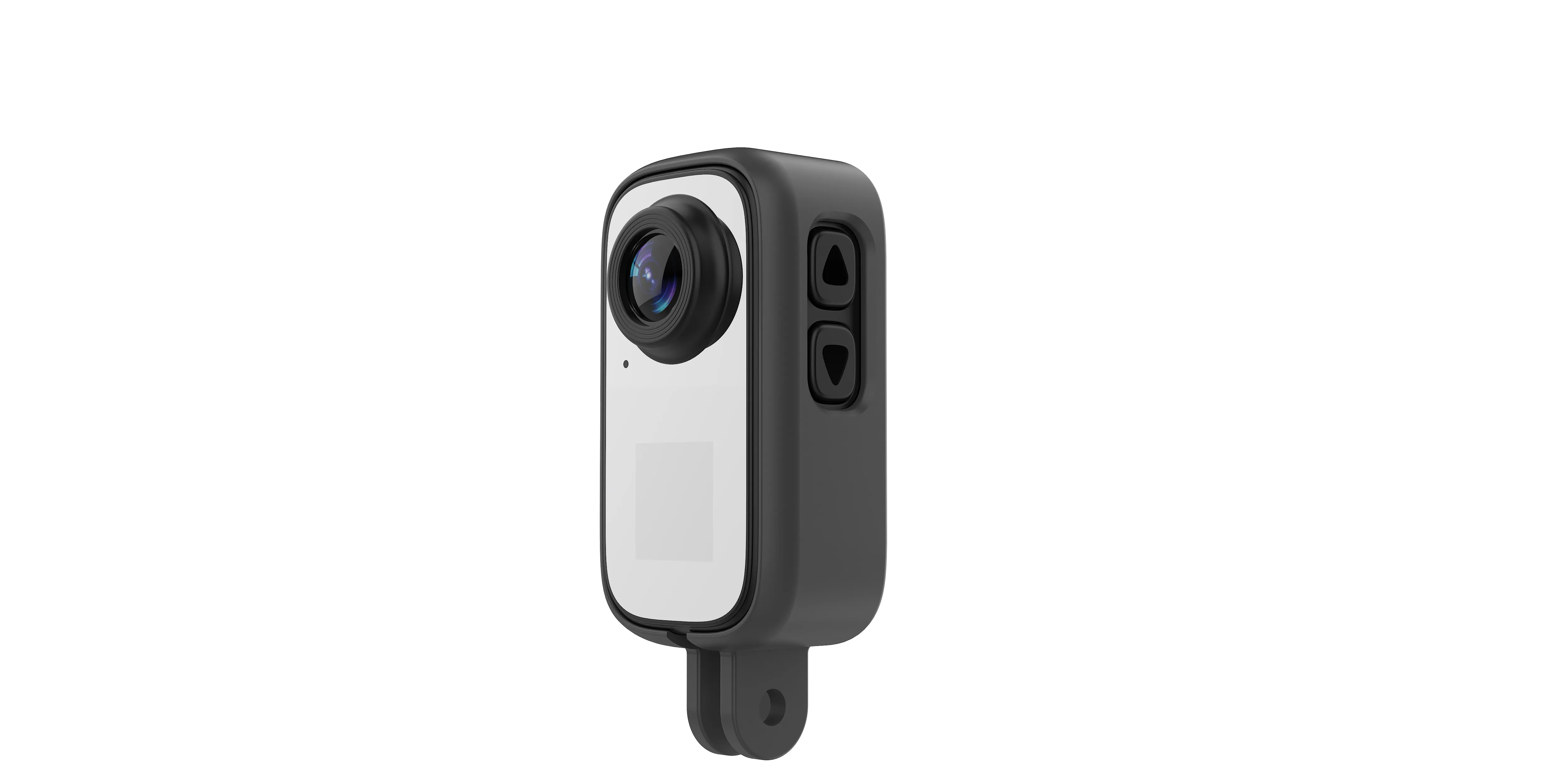
If a WiFi model fits your line, start from the AC-18 thumb action camera product page. Buyers searching for a WiFi digital camera factory often compare three things: app stability, battery life, and mounting accessories. The AC-18 covers all three, with its 10-meter app connection, 700mAh battery, and clip, mount, and lanyard accessories.
CMOS Sensors and the Engineering Behind Them
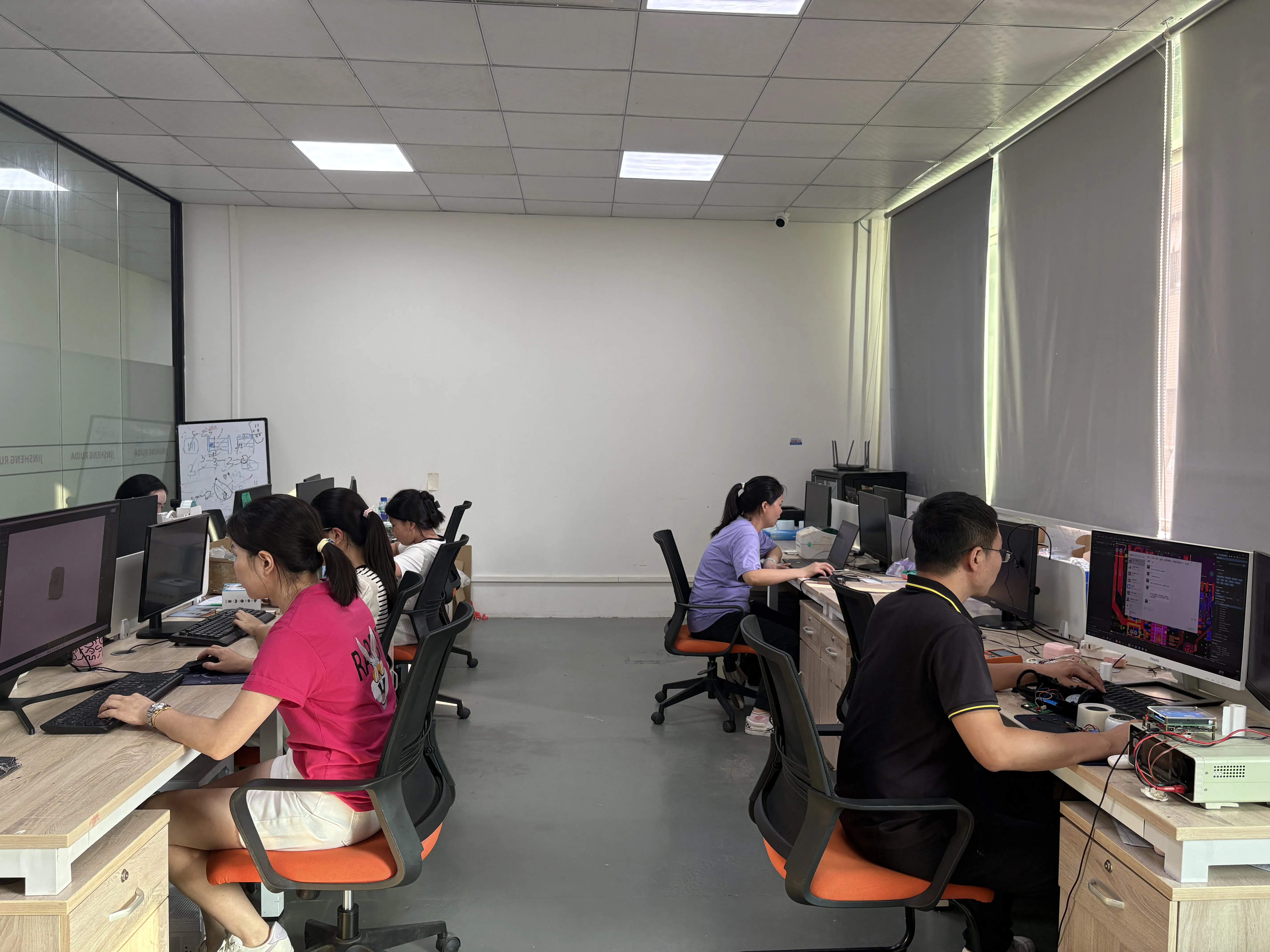
Image quality starts at the sensor. As a CMOS digital camera manufacturer, we build on CMOS sensors from 1/10″ up to 1/4″, with pixel counts from 0.3MP to 5MP. That range covers everything from $20 keychain cameras to premium compact models. Sensor size interacts directly with lens diameter and body depth, so specify the sensor early. A CMOS sensor digital camera manufacturer that owns its industrial, electronic, and structural engineering teams can tell you immediately which combinations work. Ours has all three teams in the same building as the production lines.
Buyers use different search words for the same need — “digital CMOS camera supplier“, “digital CMOS camera manufacturer“, “digital CMOS camera factory“, “CMOS sensor digital camera supplier” — but they all lead to one question: who actually controls the sensor supply? We build on a mature, cost-effective supply chain for sensors and lenses. Our reliability testing laboratory covers temperature, humidity, drop, and mechanical tests.
Our engineering group holds 7 design patents and 1 utility model patent on its own designs. That is one more signal that you are working with a product company, not a trading desk.
Certifications and Export Documents
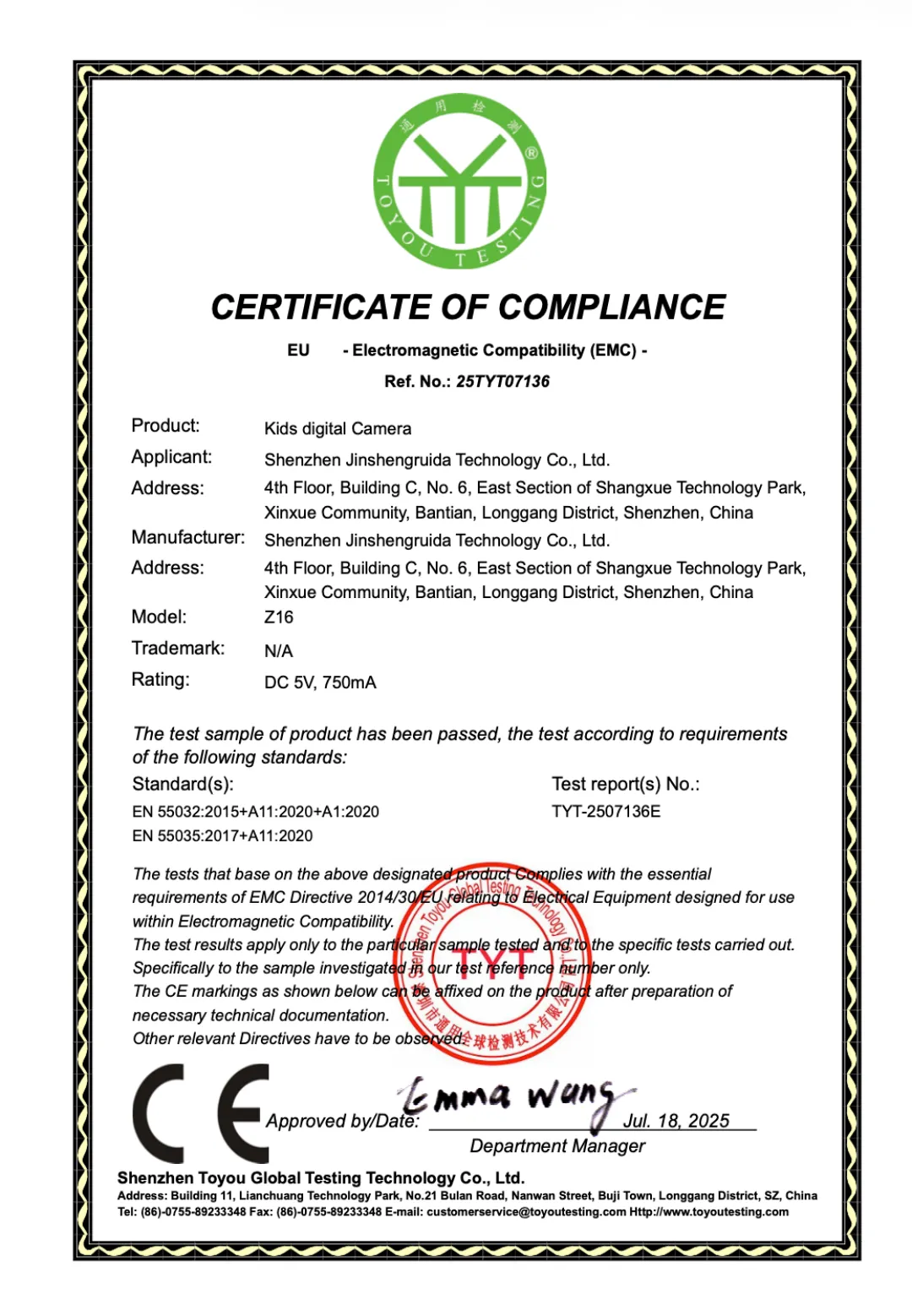
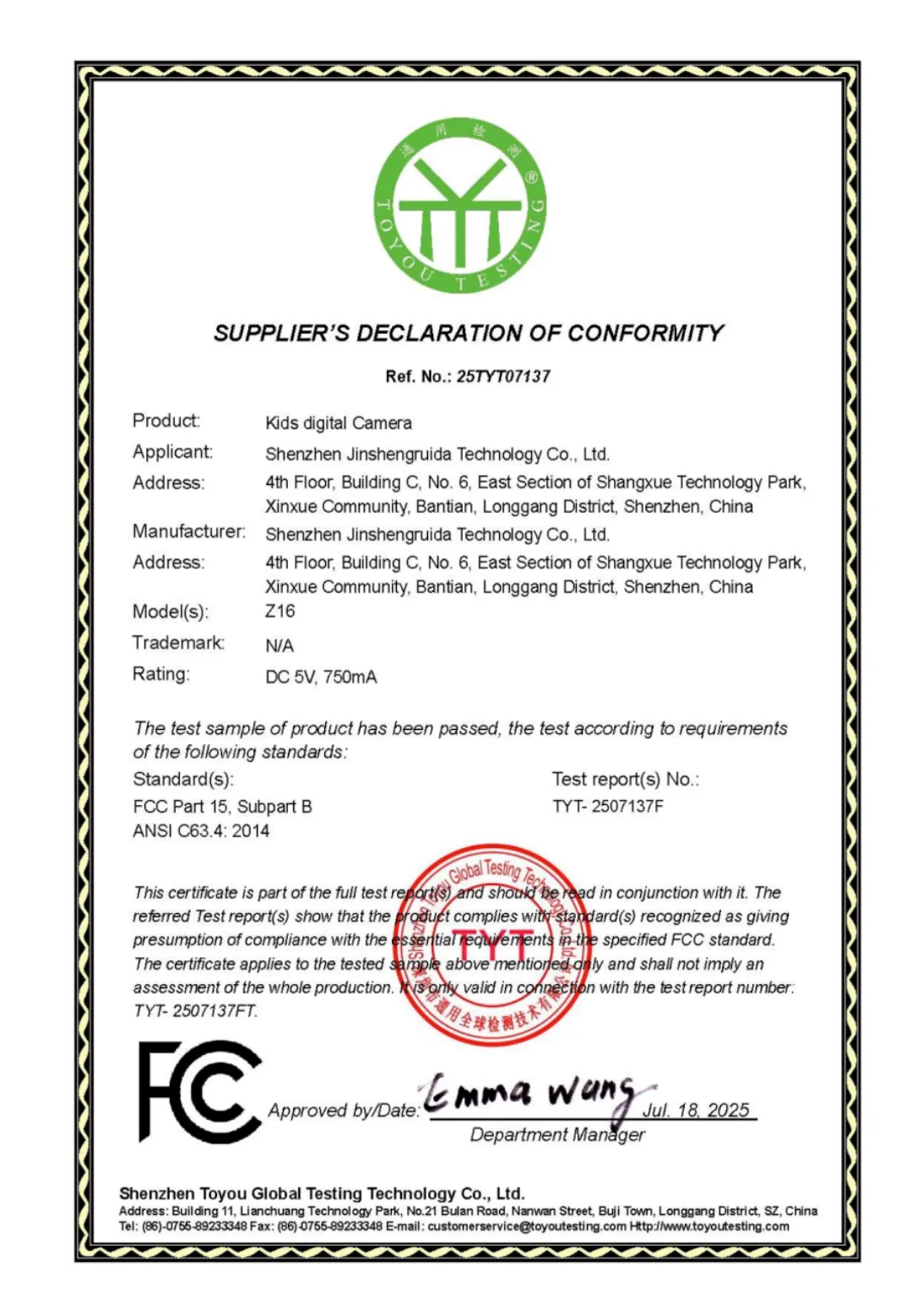
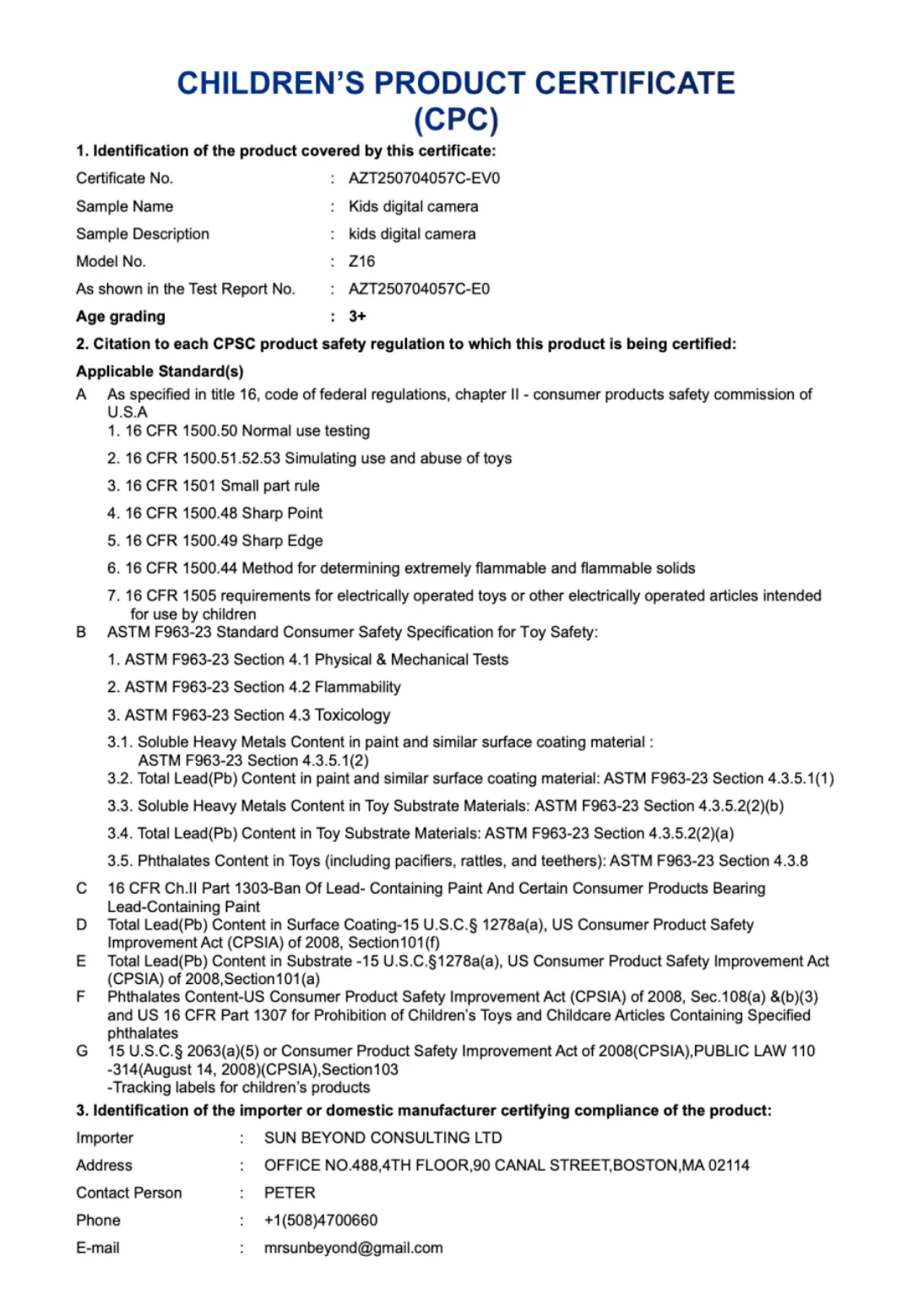
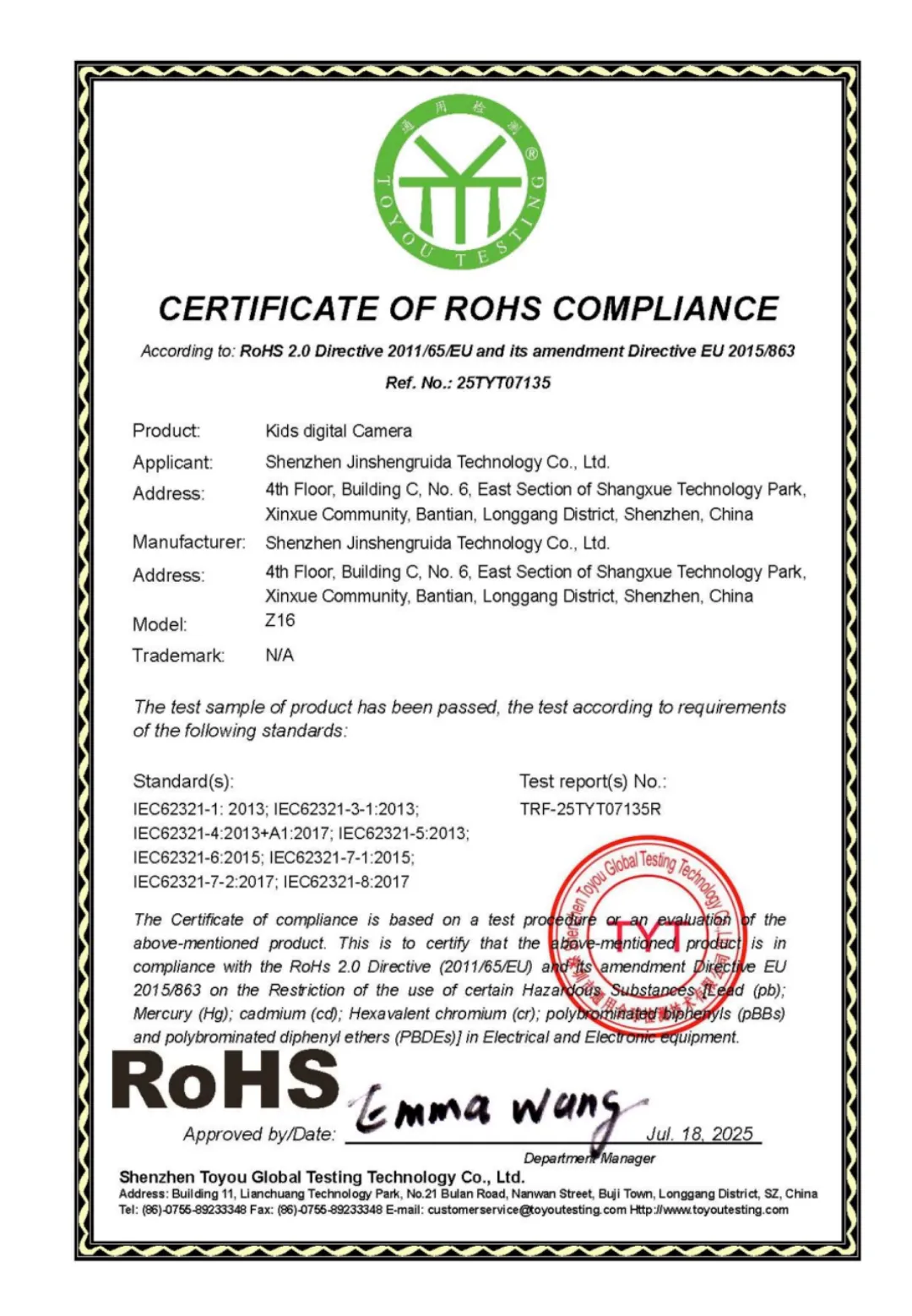
Cameras crossing borders need paperwork. Our products carry CE, FCC, CPC, and RoHS certifications, and every lithium-battery shipment includes UN38.3 transport test reports and MSDS documentation. For a CMOS digital camera distributor clearing US or EU customs, these documents are not optional. They are the difference between a container that clears and one that sits.
CPC matters if any of your SKUs (individual product models in your catalog) could be classified as children’s products in the US. FCC covers electronic emissions for the US market. CE and RoHS cover the EU. If you want the full picture country by country, read our guide on camera certifications you need to sell globally.
 |
 |
 |
 |
Working Terms: MOQ, Lead Time, and Payment
The commercial side of OEM camera production is deliberately simple:
- Minimum order quantity: 500 units (white-label), 1,000 units (OEM), on request (ODM)
- Production lead time: 15–20 days
- Payment terms: TT (telegraphic transfer)
- Response time: quotes within 1–2 business days
- Support services: small-batch customization, logo swap, laser engraving, art support, shipping support, online operations support, and after-sales support
How to Evaluate an OEM Camera Partner
Whether you are a brand, an importer, or a promotional products buyer, the same checklist applies before you commit to an order:
- Does the supplier own its factory, or is it a trading company? Ask for a live video walk-through of the production floor.
- Can it show you testing equipment — not just claim “strict quality control”?
- Which certifications can it document today — CE, FCC, CPC, RoHS — and which are pending?
- Is there an in-house engineering team for industrial, electronic, and structural design?
- What happens after shipment: does the factory offer after-sales support?
- Who handles export documents like UN38.3 and MSDS?
A CMOS digital camera manufacturer that hesitates on any of them is telling you something.
Frequently Asked Questions
Are you a factory or a trading company?
We are a factory — a CMOS sensor digital camera factory with a 1,100-square-meter facility, two camera lines, and 50–60 staff in Shenzhen.
Can I put my own brand on the cameras?
Yes. OEM orders from 1,000 units include laser-engraved logos, custom packaging, and custom colors. ODM programs add re-tooled molds, app re-branding, and firmware customization. White-label orders start from 500 units.
Do your cameras connect to a phone app?
The AC-18 connects over 2.4GHz WiFi and streams live video to a phone app within 10 meters. It is our most popular wireless model for both action-camera and lifestyle brands.
How do buyers find the right supplier category?
Every buyer searches a little differently. Some type CMOS camera digital supplier into Google, others look for a CMOS digital camera supplier, and a few go straight to CMOS camera digital manufacturer or CMOS camera digital factory. Four different phrases, one identical goal: a real factory that builds CMOS sensor cameras. Judge the factory on what you can verify — production lines, testing equipment, certifications, and patents say more than any category name ever will.
Start Your OEM Camera Program
OEM camera production works best when both sides ask questions early. Tell us your target market, quantity, and the model that interests you. We will confirm feasibility, quote, and timeline within 1–2 business days. Send your project details to our team.
Email: olivialee0822@gmail.com
Phone: +86-13609069228
JSRD (Shenzhen Jinsheng Ruida Technology Co., Ltd.)

The JSRD Editorial Team creates practical B2B guides for importers, brand owners, and Amazon FBA sellers sourcing digital cameras from China. Our content covers OEM/ODM customization, product selection, and sourcing decisions for camera products.