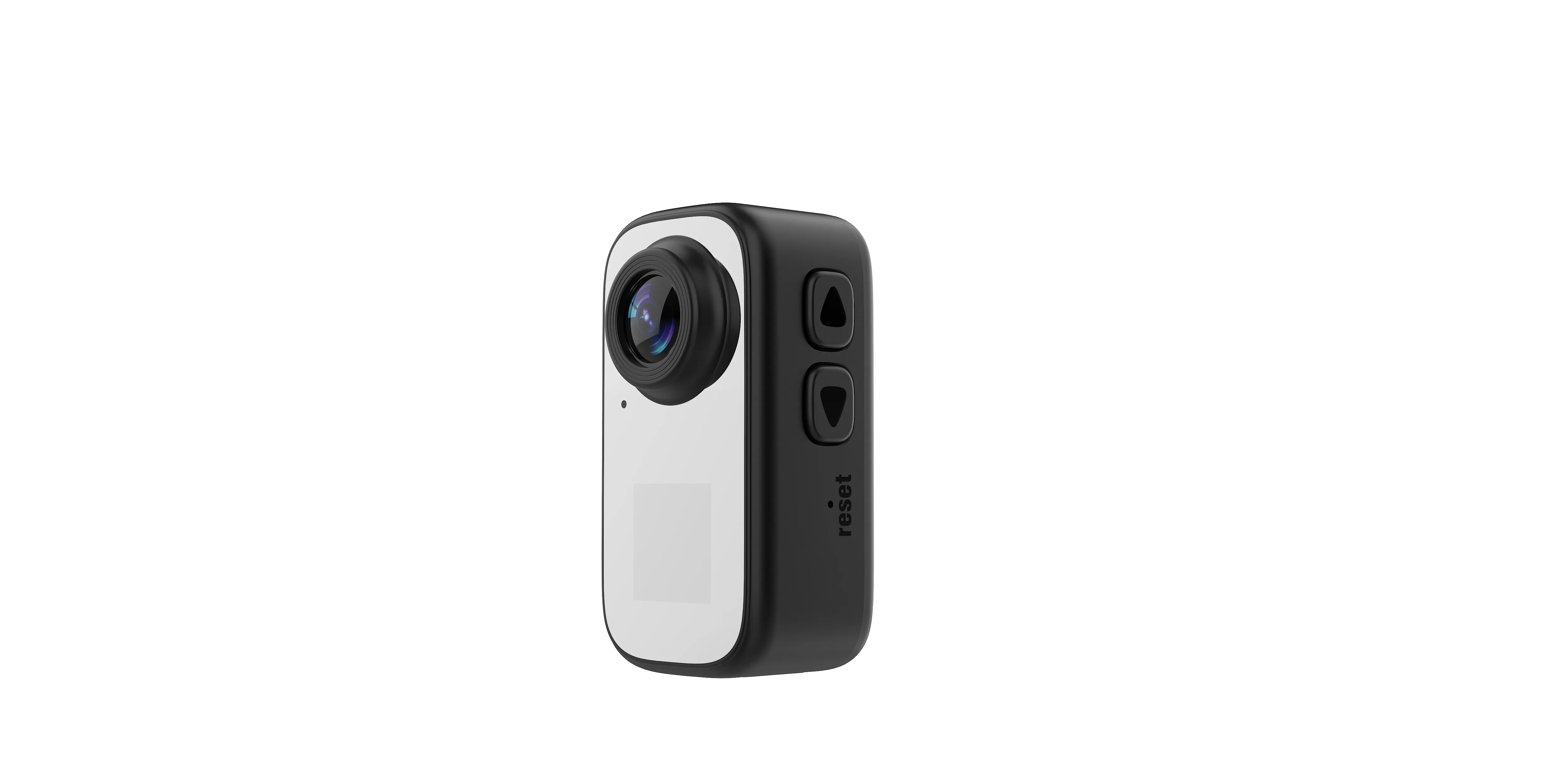
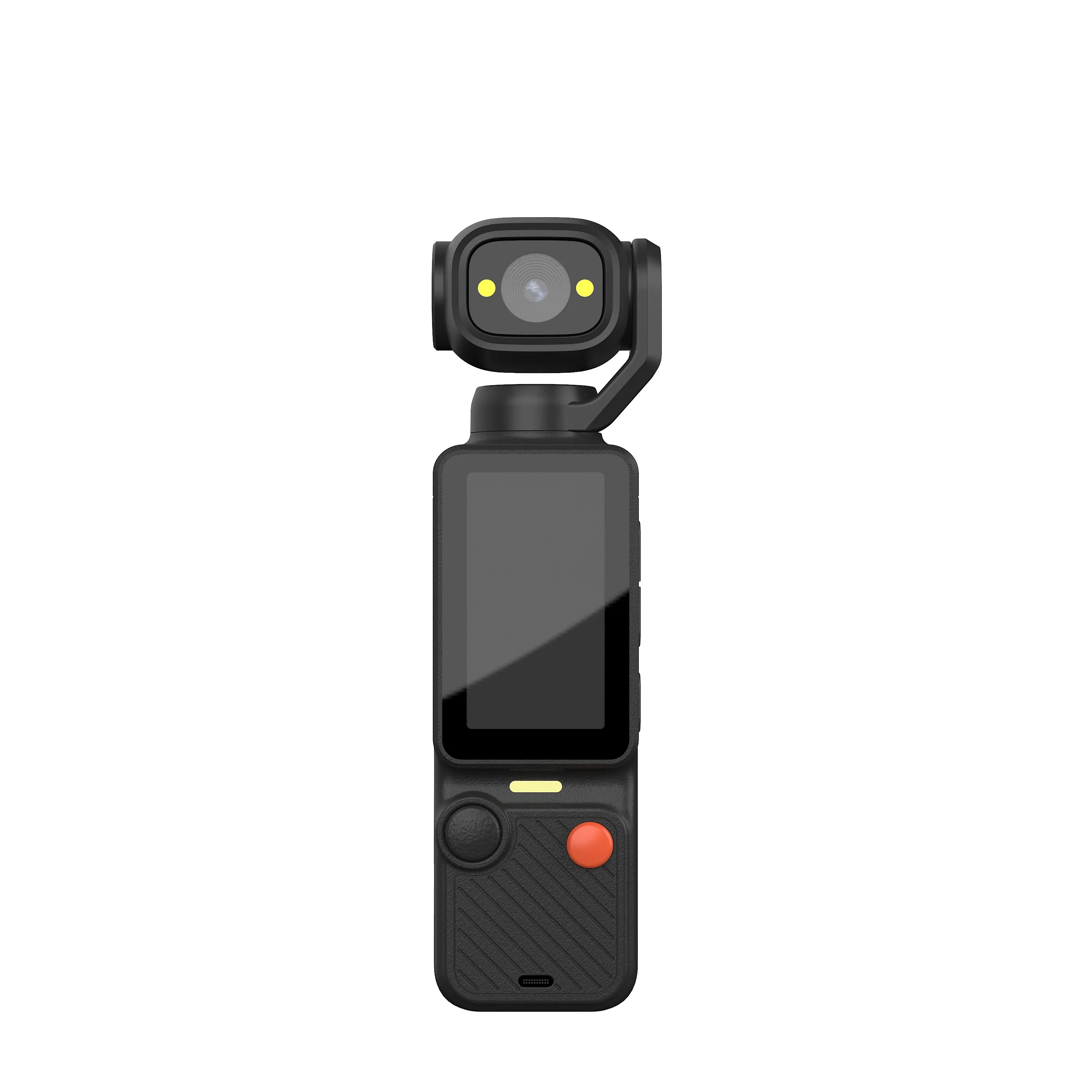
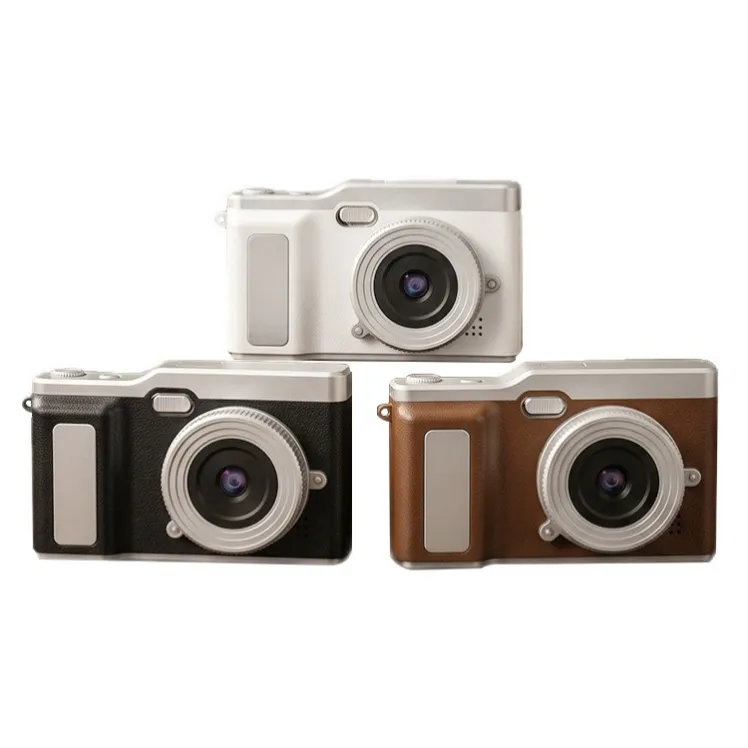
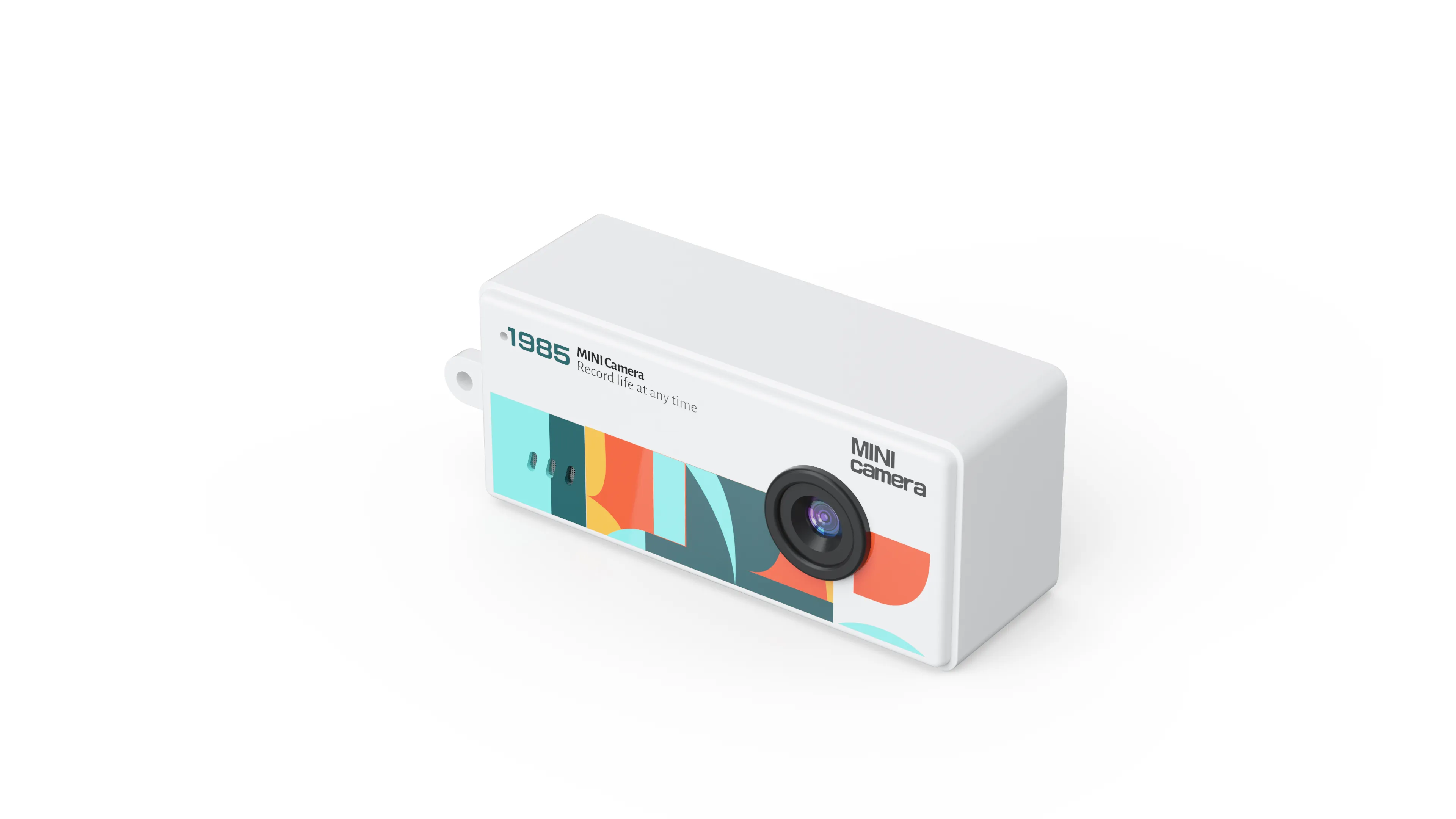
A mini camera is a real camera shrunk to pocket and keychain size: a body measured in grams, a lens, a sensor, storage, and a battery. The category carries many names and makes one promise: a camera that goes where full-size cameras stay home. This guide covers the two forms the category takes, what separates a working mini camera from a toy, the specs that matter in grams and megabytes, who buys this category in volume, and where the action line fits alongside it.
The advice comes from the factory side: JSRD runs two camera lines in Shenzhen and builds more than 2,000 cameras a day. The mini category is one of our deepest, with three models at 22 grams or less.
What a Mini Camera Is
Size is the definition. A full-size camera weighs half a kilogram and up; a mini camera weighs a tenth of that. Ours sit between 19.5 and 22 grams, which puts one in a pocket, on a keyring, or inside a gift box without a second thought.
The shrink keeps the camera parts (lens, sensor, battery, storage, screen) and removes the bulk and the learning curve. A mini camera has no modes to study and no app to register; files move over a card reader. Power on, frame, record, and the whole manual fits in one sentence.
The category splits by where the camera carries. Pocket models ride in a bag or a coat pocket. Keychain models hang where the keys hang, always within reach. Both record the same way; the difference is the carry.
Position answers the rest. Between compact models and the action line sits this category: smaller than a compact, calmer than an action build, and priced for the shelf where gifts and first cameras live. Our range runs all three, and each has its own guide on this site.
Pocket and Keychain: The Two Forms
The Pocket Form
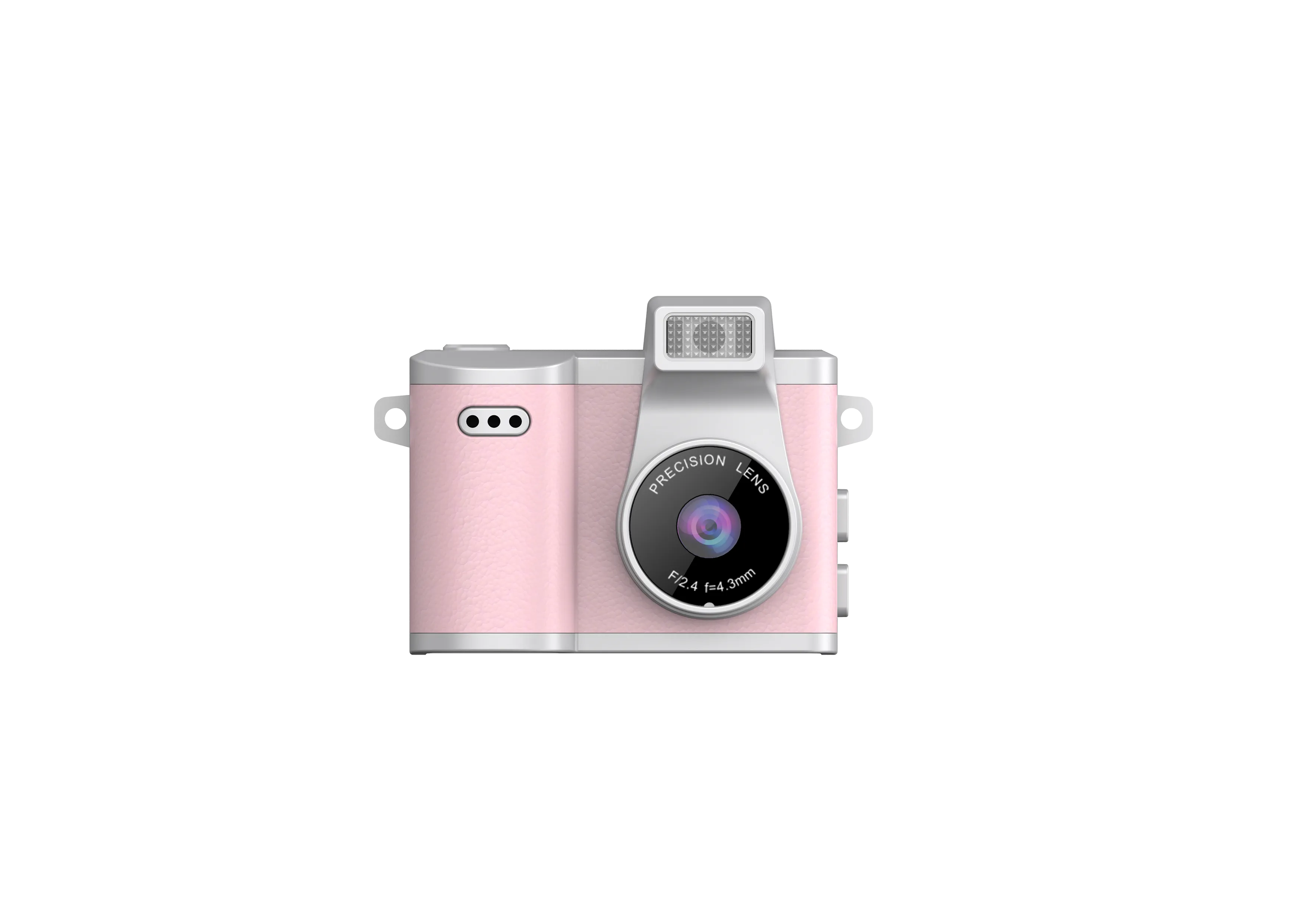
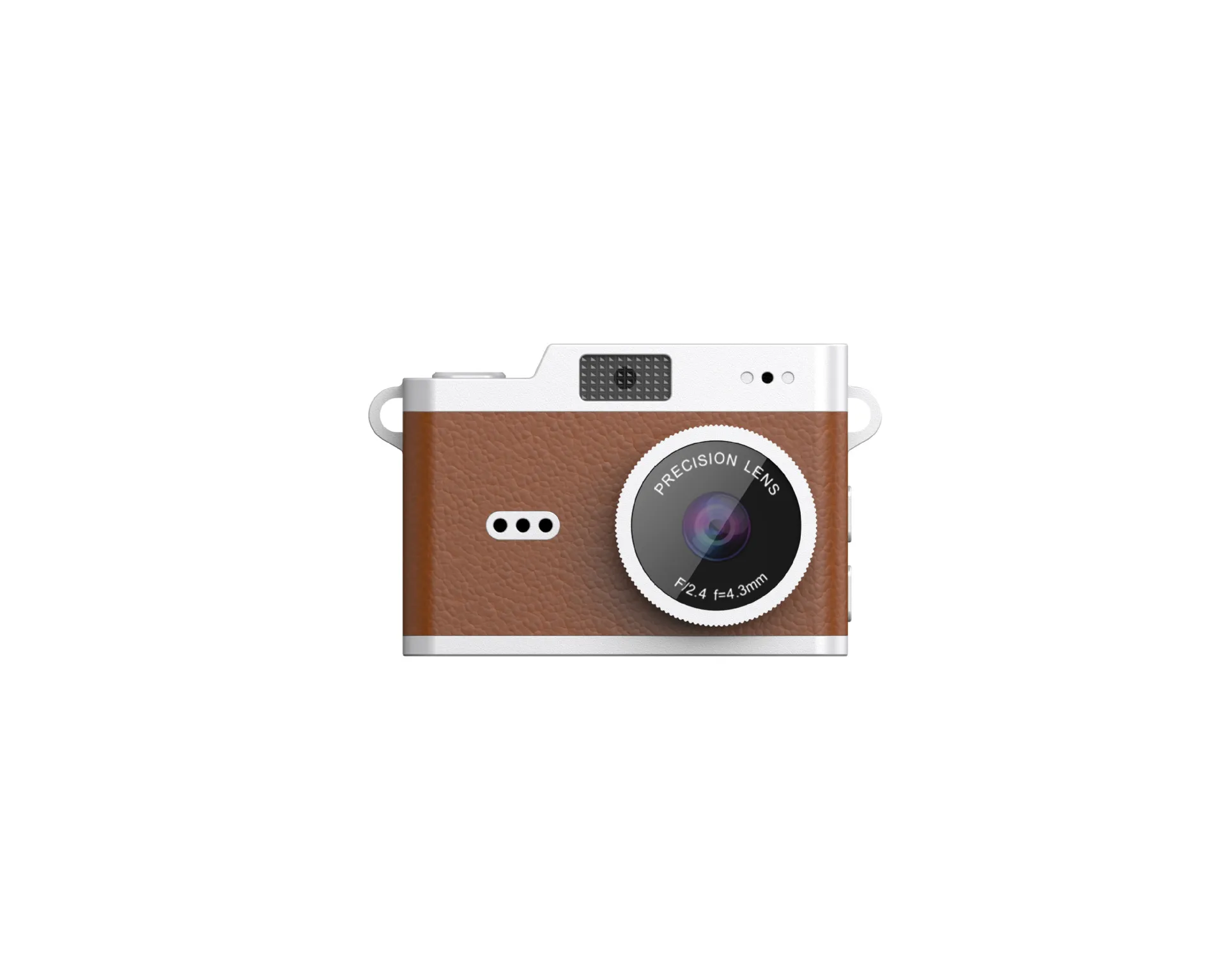
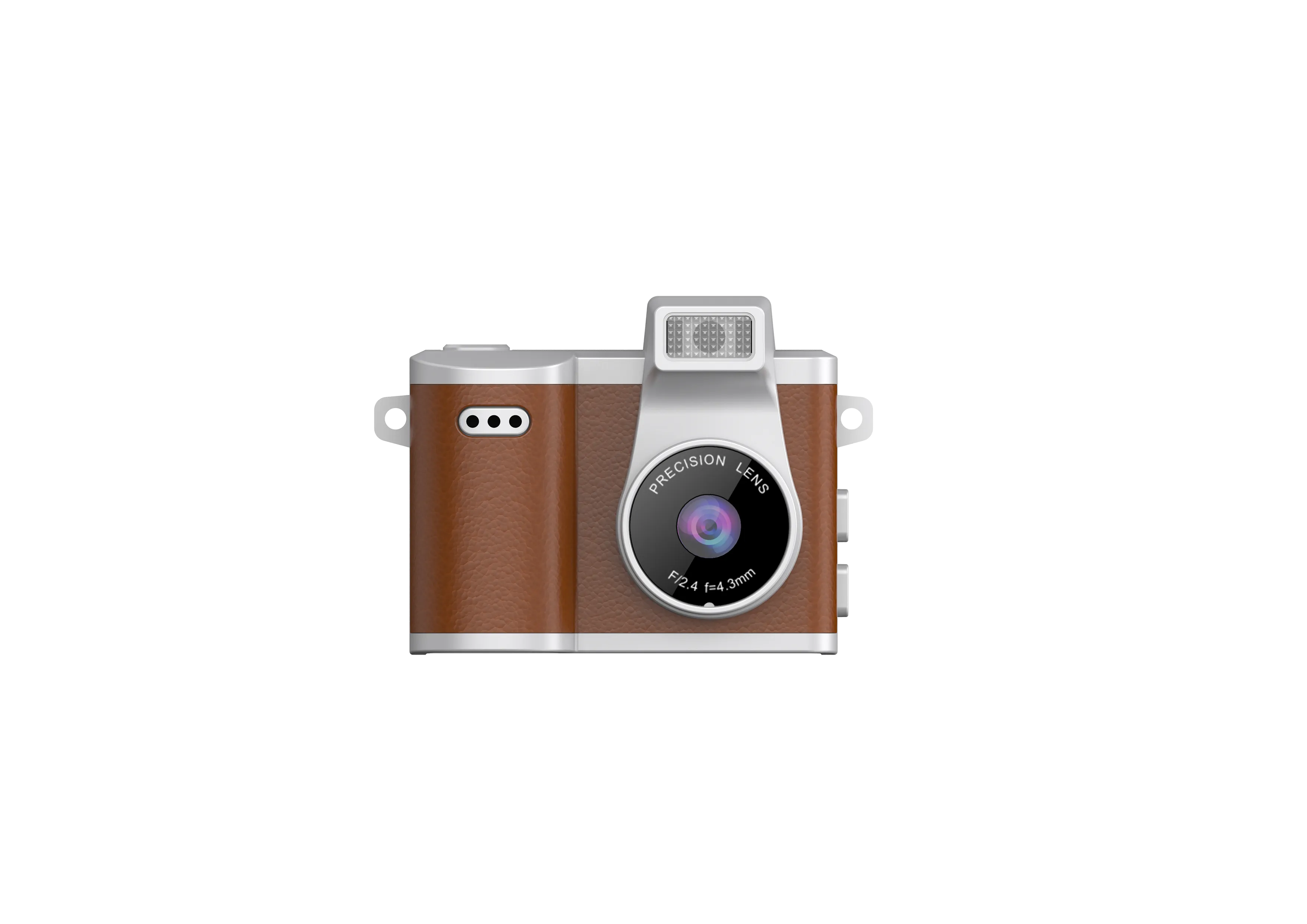
A mini pocket camera is the form most buyers picture first: a small slab with a lens on the front and a screen on the back. Listings write it four ways: mini pocket camera, pocket mini camera, pocket camera mini, and mini camera pocket. Every one of them lands on the same product. Our AC-5 and AC-8 are the pocket form, at 19.5 and 21 grams with a 0.96-inch IPS screen (IPS is a panel type with accurate color and wide viewing angles). Search tools log reorderings like camera mini and cameras mini as separate queries.
The pocket form buys discretion and speed. One hand slides it out, one finger presses record, and the moment is saved before a phone is out of the bag. Nothing about the carry needs a plan, which is why pocket models are the entry point for most mini catalogs.
Gifting fits the pocket form. The body takes a laser-engraved logo, the box takes the brand, and the price stays inside a gift budget at volume. Corporate gift programs and promotion buyers order the pocket form for a simple reason: a camera that records the recipient’s own life outlasts a giveaway that stops at the logo.
The Keychain Form
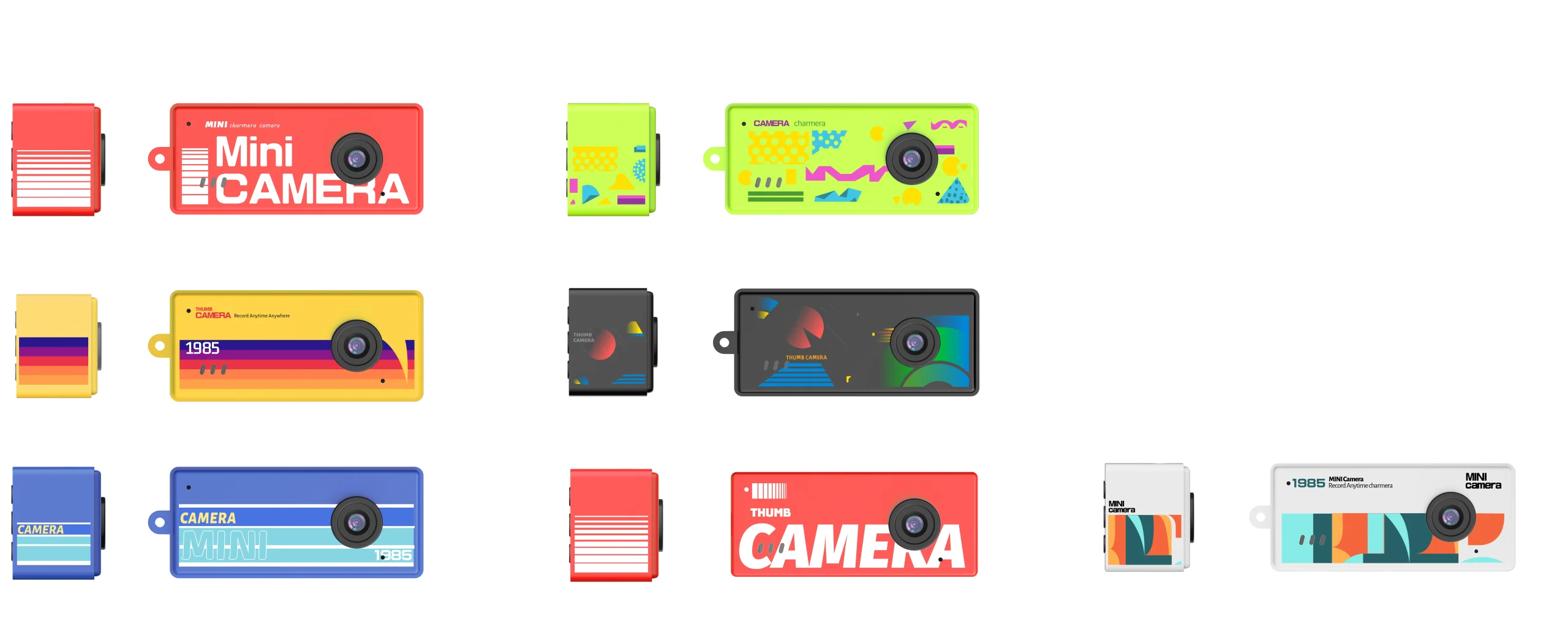
A keychain camera trades the pocket for the keyring. The body hangs where the keys hang, so the camera is there every time the keys are. Our AC-7 is the keychain form: 22 grams, six stock colors, and the same 0.96-inch IPS screen and video as the pocket models. Listings flip the order to camera keychain, or pluralize to camera keychains; the shelf does not move.
Keychain cameras earn their keep on repeat use. The camera that lives on your keys gets carried every day, and carry is what turns a gadget into a habit, which is what a gift buyer or a retail brand wants to hear.
The keyring does one more job: it is the anti-loss device. Cameras this small depend on being findable, and a keyring attaches the camera to the one object people check all day. Six colors also help a household tell two units apart, and a second color is a common second-order add-on.
“That Works”: What the Phrase Has to Deliver
Search data adds two words to the category: mini camera keychain that works, and mini keychain camera that works. The qualifier is the whole story. Buyers have been burned by novelty cameras that look right and record nothing usable, so that works has become a spec in its own right. The phrase also filters the shelf for you: products that cannot pass the four checks below are toys, whatever the box says.
Working means four things, and each one is testable:
- A real sensor behind the lens. Our minis record real photos and real video at VGA (640 by 480, the standard-definition baseline), honest files that post to social feeds and play on any device.
- Real storage. Every model records to a TF card (microSD memory card) up to 32GB, and the files stay yours: no subscription, no account.
- Real battery. A 200mAh cell charges over Type-C (the standard plug used on most phones) and powers a full session of short clips.
- Real transfer. Pull the TF card, read it in any card reader, and the files open anywhere. No cable hunting, no pairing mode.
Four checks pass and the camera works. Each check maps to a part of our build: the sensor and the video pipeline are tuned for files that survive social feeds, the TF card slot accepts the cards your market already sells, the 200mAh battery charges over the one cable everyone owns, and the card-reader transfer skips the app stores. That is the standard our production line is built around. None of the four checks needs a laboratory: each one takes less than a minute in a store or at a trade booth, which is how we recommend buyers test any mini camera, ours or anyone else’s. The four checks also read as a listing structure: sensor line, storage line, battery line, transfer line. Write them in that order on your own product page and the page answers the same questions.
The Mini Lineup in Grams
The table below is our mini line by weight:
| Model | Weight | Screen | Video | Battery | Storage |
| AC-5 | 19.5g | 0.96″ IPS | VGA | 200mAh | TF 32GB |
| AC-8 | 21g | 0.96″ IPS | VGA | 200mAh | TF 32GB |
| AC-7 | 22g | 0.96″ IPS | VGA | 200mAh | TF 32GB (keychain form, six colors) |
Three grams separate the lightest from the heaviest, and all three share the same screen, battery, and storage. Shared parts keep spare stock simple for you and after-sales simple for your customers. The three models share the same TF card format, the same charging cable, and the same menu logic, so a customer who learns one unit runs all three, and a seller stocks one set of accessories for the whole line. The model for each buyer writes itself too: the AC-5 for the lightest pocket carry, the AC-8 for the middle of the range, and the AC-7 for the keyring. The AC-5 mini camera and the AC-7 keychain camera pages show each model with photos.
The Specs That Matter at Mini Size
Screen first. A 0.96-inch IPS panel frames the shot and plays it back on the spot, which is how customers confirm they caught the moment without a computer. The panel is small on purpose: it confirms the frame and plays the file, and the camera stays small because the screen stays small.
Video and photos second. VGA video (640 by 480) and matching stills are honest files for social feeds at feed size, and that honesty is deliberate: the files a mini camera produces open anywhere and post anywhere, with no conversion step. The feed compresses everything on upload anyway, and the mini camera’s job is to have the clip, not to win a lab test. Buyers who need a bigger file belong on the action line, not in this category.
Weight third. 19.5 to 22 grams disappears into a pocket and disappears on a keyring, and that is the spec the category sells on. Our gram figures come from the production line, and a kitchen scale confirms them in ten seconds, which is the kind of honesty that survives an unboxing video. Ask any supplier for the weight in writing; a gram figure that moves between listings is a spec nobody measured.
Colors fourth. The AC-7 comes in six stock colors, and custom finishes open at volume; the six stock colors are the starting point, not the ceiling. Laser engraving puts a logo on the body across the line.
How Buyers Use Mini Cameras
Everyday carry is the first use. A pocket camera records the commute, the coffee shop, the street between appointments: the footage that full-size cameras never see because they are home in a drawer.
Travel journals come second. One small body replaces a bag of gear for travelers who post as they go, and the weight budget it frees goes to clothes and souvenirs instead.
Work documentation is third. A body-worn mini camera records a repair as it happens, a delivery as it lands, or a property walk-through as it moves, which turns disputes into clips and clips into answers.
Gatherings are fourth. A pocket camera at a table shoots the group without a lens between people, and files that transfer by card reader pass around the table before dessert.
The small stuff turns out to be the good stuff: a first coffee in a new city, a desk after a repair, a sky on the walk home. Resale display runs through all four: the clips a mini camera produces are the clips a product page needs, and the same footage works in ads, in listings, and in the review replies that answer size questions. Sellers who shoot with the camera they sell answer the weight question before it is asked.
The Action Line and the Mini Line
The two lines share a factory and split the jobs. The action line mounts where the movement happens: helmets, handlebars, chest straps. The mini line rides where the day happens: pockets, keyrings, gift boxes. A brand can carry both from the same production system, and the specs stay consistent across the range. Our action camera guide covers the mounted side in full.
The lines also share a workflow. Both run through the same quote, the same production cycle, and the same certifications, so a buyer who starts with minis can add an action model without re-learning the process. The reverse holds too: an action program adds a mini line when gift season arrives.
The split also protects your pricing. An entry buyer who finds both tiers on one page understands the range, and the mini line holds the entry shelf while the action line holds the feature shelf.
How the Mini Line Is Built
The mini line runs inside the same standardized system as the rest of the range, and that system covers product design, mold making, production management, quality control, and marketing support. Two camera lines build more than 2,000 cameras a day, and a mini order moves through the same design review, the same molds, and the same quality control as any other camera we ship.
Mold making sits inside the system too, which is why body shapes and custom touches can be quoted against real tooling instead of guesses. Two lines keep the calendar honest: one runs the current order while the other stages the next.
Production cycles run 15 to 20 days. The cycle covers the build; feasibility gets confirmed before any quote, so the spec you approve is the spec the line can produce.
Certifications and Market Papers
The mini line ships under the same certifications as the rest of the range: CE and RoHS for the EU market, FCC for the US, and CPC where children’s products are involved. Ask for document copies before you pay and match each one to your destination market.
Who Buys Mini Cameras
Gift programs buy the category’s strongest story: a real camera in a box the size of a smartphone box, at a price that fits a gift budget. Laser engraving carries the brand, the packaging carries the rest, and the gift survives the holiday because the camera gets used after it. Packaging artwork starts from a logo file, and a gift-ready box is part of the quote rather than an afterthought.
E-commerce sellers lead with the carry story. Product photos show the camera on a keyring or sliding out of a pocket, returns stay low because the product is simple, and reviews mention the weight more than anything else. The weight spec doubles as ad copy: a camera lighter than the keys it hangs with is a headline in its own right.
Importers and regional wholesalers buy the volume story: small bodies ship light, and light shipments keep freight down across a container. Freight math is part of the quote: lighter cartons fit more units per container, and the per-unit freight line drops as the body weight drops. Batch consistency holds because the same two lines build the same model the same way, production cycle after cycle.
Corporate gift and promotion buyers reach for the mini when the recipient list runs long. The per-unit cost stays inside a gift budget, and the camera outlasts the usual giveaway, which is the whole return on a promotion. A camera that survives the giveaway pile becomes a camera used every day, and a camera used every day carries a brand further than a brochure ever does.
Care and Everyday Use
Care for a mini camera is short by design. Charge over Type-C before a day out. Format the TF card in the camera when you start a new card. Check the keyring attachment the way you check your keys. Keep the lens wiped; a pocket camera’s worst enemy is a fingerprint, not a drop. Three habits, none of them fussy.
Storage habits matter as much as storage size at this tier: short clips save faster, transfer cleaner, and post quicker than one long take. Customers who film in short bursts get more out of a 32GB card than the card size alone suggests.
Ordering Mini Cameras From Us
The mini line runs on the same production system as the rest of the range, with feasibility confirmed before any quote. Laser-engraved logos, custom packaging, and small-batch customization run across the line, and packaging artwork starts from your logo file. The commercial frame: payment by TT (telegraphic transfer, a bank wire), CE, FCC, CPC, and RoHS certifications in place, and support that continues after shipping.
An inquiry that moves fast carries five facts: the market, the model, the quantity, the destination country, and the form your customers carry. Packaging ideas and certification needs slot in next, and the spec conversation starts at the right place. Certification papers, packaging artwork, and export paperwork move in parallel with production, so the container and the documents land together.
Start Your Mini Camera Brief
Tell us the market, the quantity, and the form your customers carry. Send your mini camera requirements to our team, and feasibility and pricing follow the confirmed spec.
JSRD (Shenzhen Jinsheng Ruida Technology Co., Ltd.) builds mini, keychain, action, compact, and gimbal cameras for overseas brands.
Email: olivialee0822@gmail.com
Phone: +86-13609069228

The JSRD Editorial Team creates practical B2B guides for importers, brand owners, and Amazon FBA sellers sourcing digital cameras from China. Our content covers OEM/ODM customization, product selection, and sourcing decisions for camera products.